Last updated November 17, 2026








Free written scope consultation - allowances, timeline, and change-order rules on paper before a single trade is scheduled
Home Remodeling Warning Signs Every Homeowner Should Know
The most expensive remodeling scams in California don’t start with a handshake deal. They start with a contract that uses vague scope language, no payment schedule tied to milestones, and an arbitration clause that waives your right to sue. We’ve watched homeowners in Westminster sign five-figure agreements they never read past page two, then discover six months later that the “allowance” for tile was a placeholder, the “substantial completion” date had no teeth, and the crew on site was never named in the paperwork. This guide walks through the warning signs that actually cost money: the buried contract clauses, the licensing gaps, and the change-order playbook. By the end, you’ll know what a clean contract looks like.
Quick Answer
The biggest home remodeling warning signs are not the ones on the surface. They’re contract clauses that protect the contractor instead of you: open-ended “time and materials” pricing, vague “substantial completion” language, change orders authorized by a signed work order with no cap, missing subcontractor names, and arbitration clauses that strip your right to sue. A contractor who won’t put a fixed price in writing before work starts, won’t name their subs, and won’t show a license and bond record is telling you how the whole job will go.
Styles & brands we work with
- Kitchen remodeling
- Bathroom remodeling
- Home additions & ADU
- Roofing
- Windows & doors
- Driveway & pavers
- Fence
Table of Contents
- Why the Contract Matters More Than the Handshake
- Warning Sign #1: “Time and Materials” Pricing
- Warning Sign #2: “Substantial Completion” With No Deadline
- Warning Sign #3: Change Orders You Authorize by Accident
- Licensed vs. Bonded vs. Insured: What Each Actually Protects
- The Subcontractor Disclosure Problem
- The Lowball-Then-Change-Order Playbook, Step by Step
- The Five-Minute Pre-Signing Checklist
Why the Contract Matters More Than the Handshake
Word of mouth is how most remodeling leads move. Somebody’s neighbor in Westminster got a good kitchen, they hand you a phone number, and you call. That’s how it should work. But the handshake doesn’t bind anyone. The contract does. Every dollar you’re going to spend, every protection you have if the work fails, and every right you give up is decided by the eight or twelve pages you sign at the start.
California contracting law is actually written to protect homeowners. The Business and Professions Code requires a written contract for jobs over a certain dollar threshold, requires a defined payment schedule, and requires disclosures about who carries workers’ compensation insurance. The problem is that unscrupulous contractors know the law better than most homeowners do, and they structure their paperwork to sit just inside the line while removing your leverage. The red flags below are legal. That’s what makes them dangerous.
We’ve reviewed hundreds of contracts people bring to us after a job stalled out. The pattern is consistent: the signs were there on page one, and nobody read page one. When a homeowner calls us for a whole-home remodel or a kitchen remodel in Westminster, we start by explaining what our written price does and doesn’t cover, not by handing over a pen. That’s The Garrison Standard, and it exists because the opposite happens too often.
Warning Sign #1: “Time and Materials” Pricing
“Time and materials” means the contractor bills you for every hour worked and every item purchased, plus a markup on materials. It sounds fair. It is the single most dangerous pricing structure a homeowner can sign, because it gives the contractor zero incentive to work efficiently and hands them the ability to bill you into the stratosphere without ever exceeding the “quote.”
Here’s the trap. A time-and-materials contractor will give you an estimate, and the estimate will look reasonable, maybe even competitive. But the contract doesn’t say that number is the price. It says something like “estimated labor hours: 240” with no overage cap. When the 240 hours become 410, you owe for 170 extra hours and no cap was in the document to stop it. According to the Contractors State License Board, the biggest category of complaint they see involves exactly this gap between the estimate and the final invoice.
What a defensible pricing structure looks like:
- A fixed price per scope line. Not a total, but a number against each line item – demo, rough-in, drywall, cabinetry, finish. If the number moves, the scope moved, and the change order says why.
- A “not to exceed” cap on any labor-hour billing, so the hours can’t balloon.
- An allowance schedule with real numbers. “Tile allowance: $8 per square foot” is a number. “Tile allowance: TBD” is a trap. If a contractor won’t put a number on the allowance, they plan to use it as a piggy bank.
- A written price before any work starts, not after demo. That’s the difference between a quote and a bid. We give the first.
When we quote a Westminster kitchen in an older neighborhood off Westminster Boulevard – a lot of these ranches still have the original 1960s galley – the countertop number is a Cambria or Silestone figure, written in the contract. If you choose a different surface, the contract changes by a written number. That is the whole point of a fixed price.
Warning Sign #2: “Substantial Completion” With No Deadline
“Substantial completion” is a real construction term. It means the point at which the project is usable for its intended purpose – kitchen appliances working, plumbing running, walls painted – even if a punch list of small items is still open. In a good contract, “substantial completion” is defined on a calendar date and tied to payment. In a bad one, it’s a phrase with no date and no definition, and it can float for months.
Read the completion clause closely. If it says anything like “Contractor shall achieve substantial completion in a workmanlike manner” with no calendar date and no definition of what counts, the contractor has given themselves infinite time. Because the word “substantial” is subjective, the argument about whether it’s been achieved becomes yours to lose. Every week the job drags is a week your kitchen stays torn apart, your family eats takeout, and your final payment sits in an escrow account earning nothing.
What to insist on instead:
- A calendar date for substantial completion in the body of the agreement, not in an attachment.
- A definition of what counts as achieved – for a kitchen that might be “all plumbing, electrical, and appliance installations complete and inspected, walls finished and painted, cabinets installed.”
- A penalty or liquidated-damages clause for delays the contractor causes (weather delays and permit delays get their own carve-out). A contractor who won’t accept any delay penalty is telling you their schedule is soft.
- Payment tied to milestones, not dates. Money moves when a phase is complete and inspected, not when a calendar page flips.
That last point alone eliminates most of the risk. In our contracts, no milestone payment is released until the phase is signed off. If a contractor balks at milestone billing, that’s your answer.
Warning Sign #3: Change Orders You Authorize by Accident
Change orders are legitimate. Any remodel in a Westminster home built before 1980 is going to turn up something – a rotted subfloor, aluminum wiring someone hid behind drywall, a drain line running where the old vanity sat. That’s normal. What’s not normal is a contract that lets the contractor authorize a change order on your behalf, or that treats a verbal “yeah, do what you have to do” as a signed order.
Look for two specific clauses. First: “Contractor may make field modifications as necessary.” That is carte blanche. It means the electrician finds a problem, the contractor orders the fix, and you see it on the invoice at the end. Second: “Verbal authorization is binding.” In the right circumstances California does recognize verbal change orders, and the burden of proof falls on you. If the contract says your verbal “yes” is an authorized $4,800 change, then it is.
What a legitimate change-order clause looks like:
- Written order, signed by the homeowner, before any work on the change. No exceptions, no verbal starts, no “we’ll paper it up later.”
- A price on the change order, not a description with “TBD.” The change order is a mini-contract, and it has its own fixed number.
- A schedule impact statement – one sentence that says how the change pushes the substantial completion date.
- A written process for field discovery that names the contractor’s responsibility to stop and get your signature before proceeding.
The trade-off is one extra phone call or one extra email per change. That’s the whole downside. The upside is you can’t get an $11,000 surprise on the final invoice for work you never agreed to. We’ve seen that surprise more than once, and it always traces back to the same clause.
Licensed vs. Bonded vs. Insured: What Each Actually Protects
Homeowners use these three words interchangeably. They are not the same thing, and each covers a different failure. Confusing them is how people end up with an uninsured crew doing dangerous work in their house.
- Licensed means the contractor has passed the CSLB exams and holds a valid license in the trade class for the work being done (B for general building, C-54 for tile, C-36 for plumbing, and so on). Licensing gives you the right to file a complaint, the right to the CSLB’s arbitration process for certain disputes, and a source of discipline if work is abandoned or fraudulently performed. It does not put any money in your pocket when the job goes sideways.
- Bonded means a bond company has set aside a pool of money (the “bond”) the homeowner can make a claim against if the contractor violates the license law – abandons the job, fails to pay subs, or causes certain damage. The bond is not insurance. It’s a limited claim fund, and the CSLB sets the amount. It matters, but it won’t rebuild your kitchen.
- Insured means the contractor carries general liability insurance and workers’ compensation coverage. General liability protects you if the crew damages your house or a neighbor’s. Workers’ comp protects you if a worker is injured on your property – in California, if the contractor doesn’t carry workers’ comp, the homeowner can be exposed for the injury. This is the coverage that actually matters when something goes wrong. You should request the certificate of insurance and, where you can, verify the policy directly with the carrier.
Westminster contractors are held to the same CSLB rules as the rest of California, but the local market matters. A lot of the smaller shops in the area operate as sole proprietors, and some hold a license but haven’t kept their bond current or haven’t maintained workers’ comp because they have zero employees. The certificate request is how you find out. Ask for the license number, the bond, and the COI in one email. A good contractor sends them the same day. A bad one stalls.
The Subcontractor Disclosure Problem
Most remodeling work is not done by the contractor whose name is on the sign. It’s done by subcontractors – a plumbing sub, an electrical sub, a drywall crew, a cabinet installer. That’s normal and healthy. The problem is when the contract doesn’t name them, because then you have no idea who is actually walking into your house, whether they’re licensed, or whether they’re insured.
California requires a licensed contractor to list subcontractors under certain conditions, and a properly written contract names them where the law requires. But even where it isn’t strictly required, a good contract names the subs anyway and gives you their license numbers. If your agreement says “Subcontractors: to be determined,” you are being told that anyone could show up – an unlicensed helper, a rented crew, someone with no workers’ comp coverage. If a worker is injured on that crew and the sub is uninsured, the exposure can come back to you as the homeowner.
Two additional tells:
- The contractor can’t tell you the sub’s name when you ask. This usually means the sub hasn’t been hired yet, which means pricing is going to float to whatever the sub charges.
- The contract names subs but has no license numbers. Ask for them, then look each one up on the CSLB site. It takes thirty seconds.
We keep a documented roster of name-brand materials for the same reason – KraftMaid cabinetry, Kohler and Moen fixtures, GAF roofing, James Hardie siding, Therma-Tru doors – because a traceable spec is a check on quality. The subs should be traceable too. Every Bradford job is staffed by background-checked, uniformed technicians, and the subs underneath them are named and licensed in the contract.
The Lowball-Then-Change-Order Playbook, Step by Step
This is the specific playbook we’ve walked homeowners through dozens of times, and it works because it exploits the pressure of choosing a contractor at the worst possible moment – when you’re tired of getting bids and just want to start.
- The too-good bid. One contractor comes in 15-25 percent under everyone else. They attribute the gap to “volume” or “relationships with suppliers.” There is no volume discount that big. The low bid is a bid to get the contract, not to build the job.
- The scope gap. The low bid quietly omits line items everyone else included – permits, haul-away, subfloor repair, painting, temporary kitchen setup. Read the line items against every other bid. The missing line is where the margin lives.
- The vague change-order clause. The contract includes language like “additional work will be billed at time and materials” and “work may proceed under verbal authorization.” This is the door the next invoice walks through.
- The demo surprise. The crew opens the wall, finds “unexpected” conditions (some real, some invented), and tells you the job can’t continue without the fix. By now your kitchen is a hole in the ground and you have no other contractor lined up. Pressure is at its peak.
- The change order with a number. You sign, work proceeds, and the pattern repeats. Final invoice comes in 30-40 percent over the original “quote.” This is where most homeowners call us – after the first invoice, with a hole in the wall and a contract that gave them no leverage.
The fix isn’t exotic. Insist on a fixed price per line, a written change-order process, and milestone payments. A contractor who plans to run the playbook won’t sign that contract. A contractor who plans to build the job will.
The Five-Minute Pre-Signing Checklist
Before you sign anything, run these seven checks. It takes about five minutes with a phone and a laptop, and it will catch most of the risk.
- Look up the license number on the CSLB site. Go to cslb.ca.gov and use the license lookup. Confirm the name matches the company you’re hiring, the license class matches the work, and the status is “Active.” If the number doesn’t match the name on the contract, walk away.
- Confirm the bond is current. The CSLB lookup shows the bond status. A lapsed bond is a red flag on its own.
- Request the certificate of insurance. Ask for general liability and workers’ comp, with limits shown. If workers’ comp is listed as exempt, ask why, and understand what “exempt” means for your exposure.
- Get the sub list in writing, with license numbers. Then look up each sub on the CSLB site. Same five minutes, same check.
- Verify the payment schedule is tied to milestones. No payment should precede work completed. A common schedule is 10 percent down, then milestone draws against phases, with a final holdback released after walk-through.
- Confirm a lien waiver or conditional waiver is in the contract for each payment. A lien waiver is the document that says the sub has been paid for the work covered by the previous draw, which protects your property from a mechanic’s lien. If there are no waivers, a sub you’ve never met can place a lien on your house.
- Read the arbitration and dispute-resolution clause. If the contract requires binding arbitration through the contractor’s chosen provider, you’re likely giving up your right to sue. You can ask to strike or modify that clause before you sign; a reputable contractor will negotiate.
If a contractor resists any of these seven steps, that resistance is your sign. A by-the-book contractor expects them. That’s the whole point of getting a written price before the first tool comes out – it means you had a chance to read the paperwork before it mattered.
Common Mistakes to Avoid
- Signing on the first visit. Even if the price is great, take the contract home and read it. A contractor who pressures you to sign that same evening is telling you the contract won’t survive a night’s thought. Real pricing survives a week.
- Comparing only the bottom-line number. Compare line items. Two bids that are both $68,000 can be wildly different jobs – one includes permits and haul-away, the other has a Kholer allowance for the bathroom and a “TBD” for exterior door. The bottom line hides the scope.
- Assuming “licensed” covers you. A license gets you a complaint process. Insurance is what pays a claim. Get the COI, verify it, and check workers’ comp. The bond only goes so far and covers specific violations, not damage.
- Skipping the permit. Unpermitted structural or plumbing work is a problem at resale in Westminster because title and disclosure rules follow the work even after you sell. Permits are also the only way you get inspections, and inspections catch mistakes before they’re covered up.
- Not asking for the sub names. If your contract names no subcontractors, ask. If the answer is “we’ll figure that out,” you don’t know who’s coming into your house or whether they’re covered.
- Ignoring the completion date. A contract without a substantial completion date is a contract with no deadline. That’s not a scheduling preference, it’s leverage the contractor keeps and you lose.
- Paying too much up front. California limits down payments on home improvement contracts. A contractor asking for 50 percent before any material is ordered is trying to fund their business on your cash. Milestone draws protect both sides.
One warning worth repeating: on a kitchen or whole-home remodel, the demo phase can expose electrical, plumbing, and structural issues that are genuinely dangerous. Don’t let anyone – a licensed pro included – talk you into poking at an open panel, a gas line, or a load-bearing wall to “just see what’s behind it.” That work belongs to a licensed electrician, plumber, or structural engineer, and the fact that a contract lets the general contractor run the schedule doesn’t mean they can run the wire. We don’t, and neither should anyone you hire.
See the difference
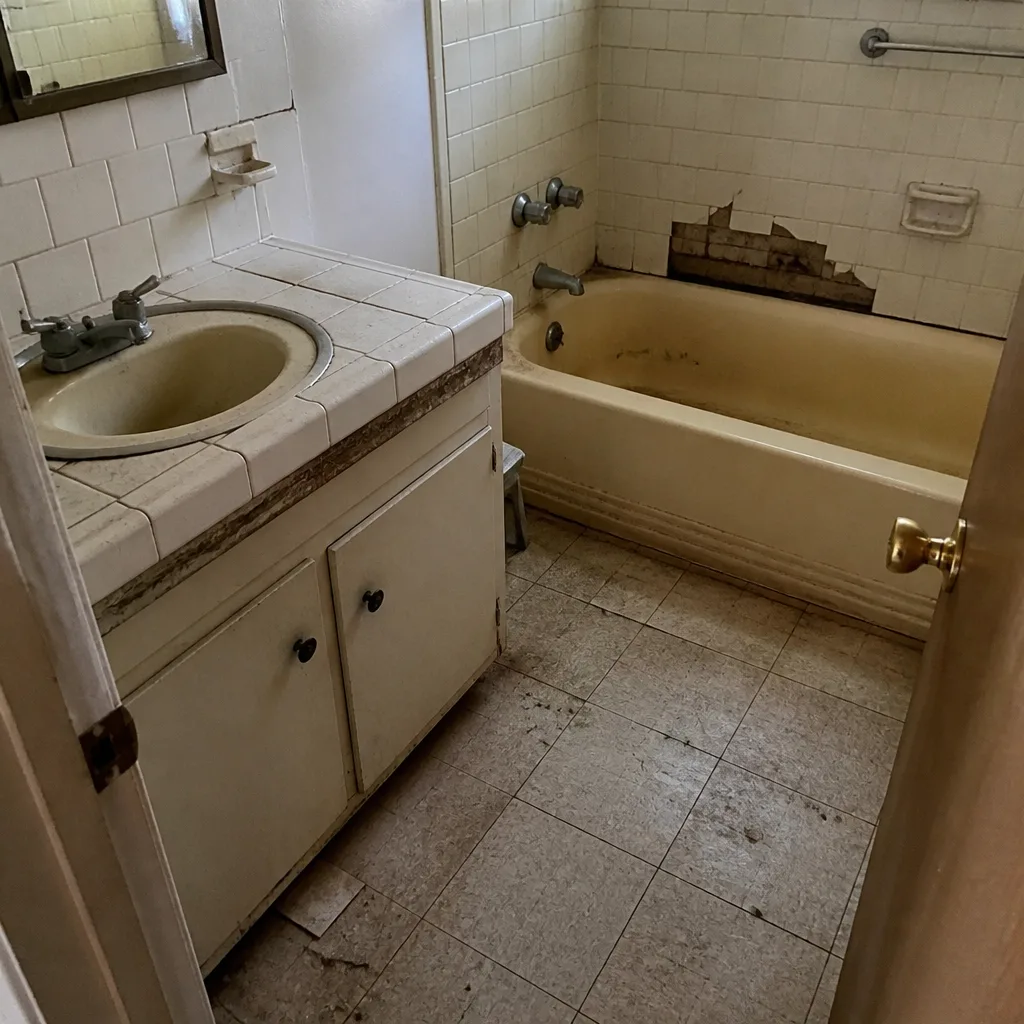 Before
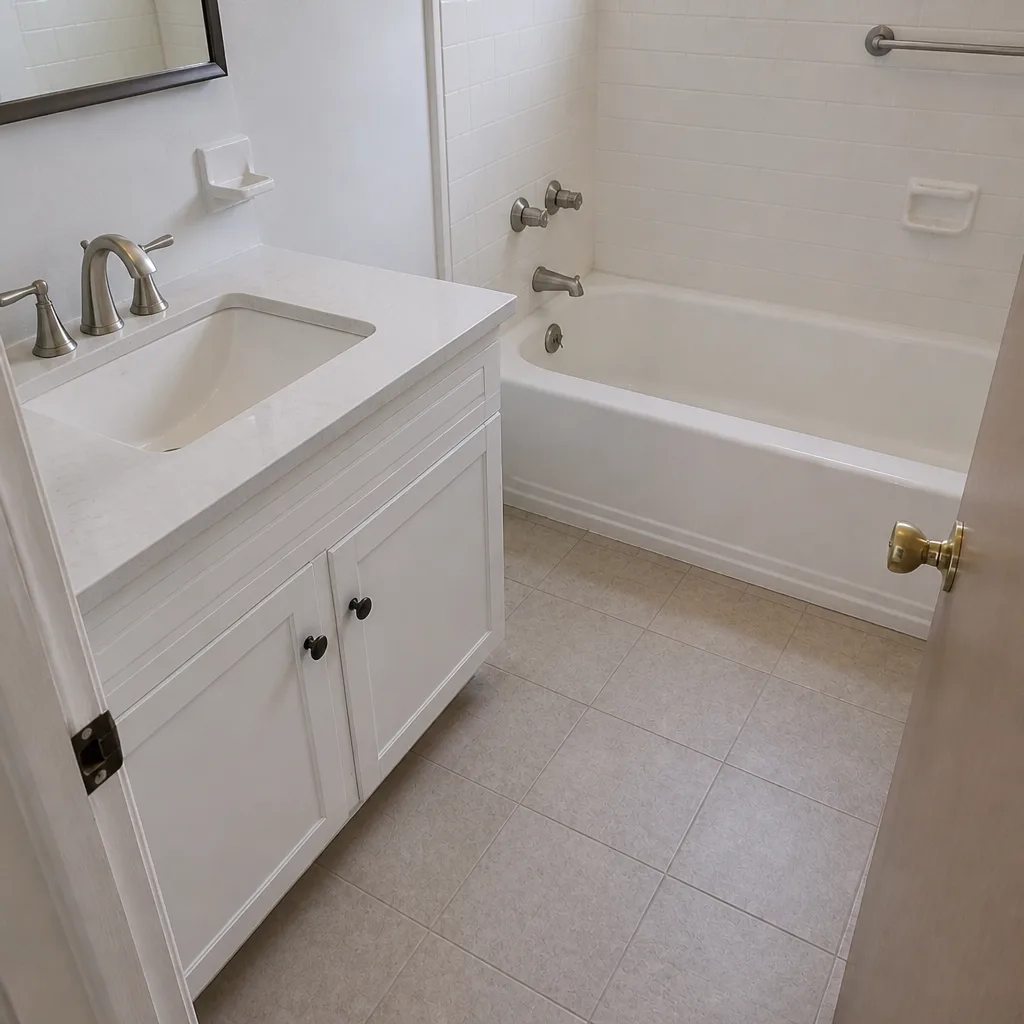 After
 Before
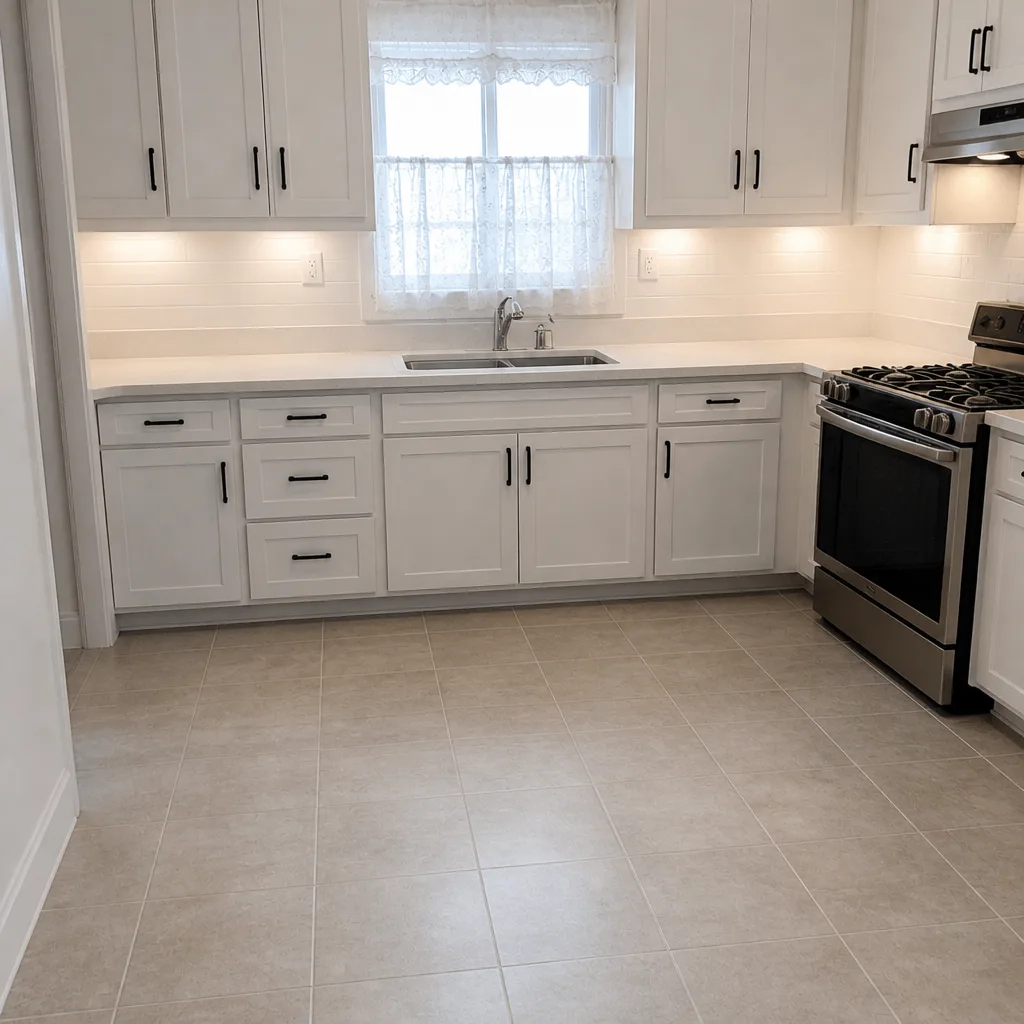 After
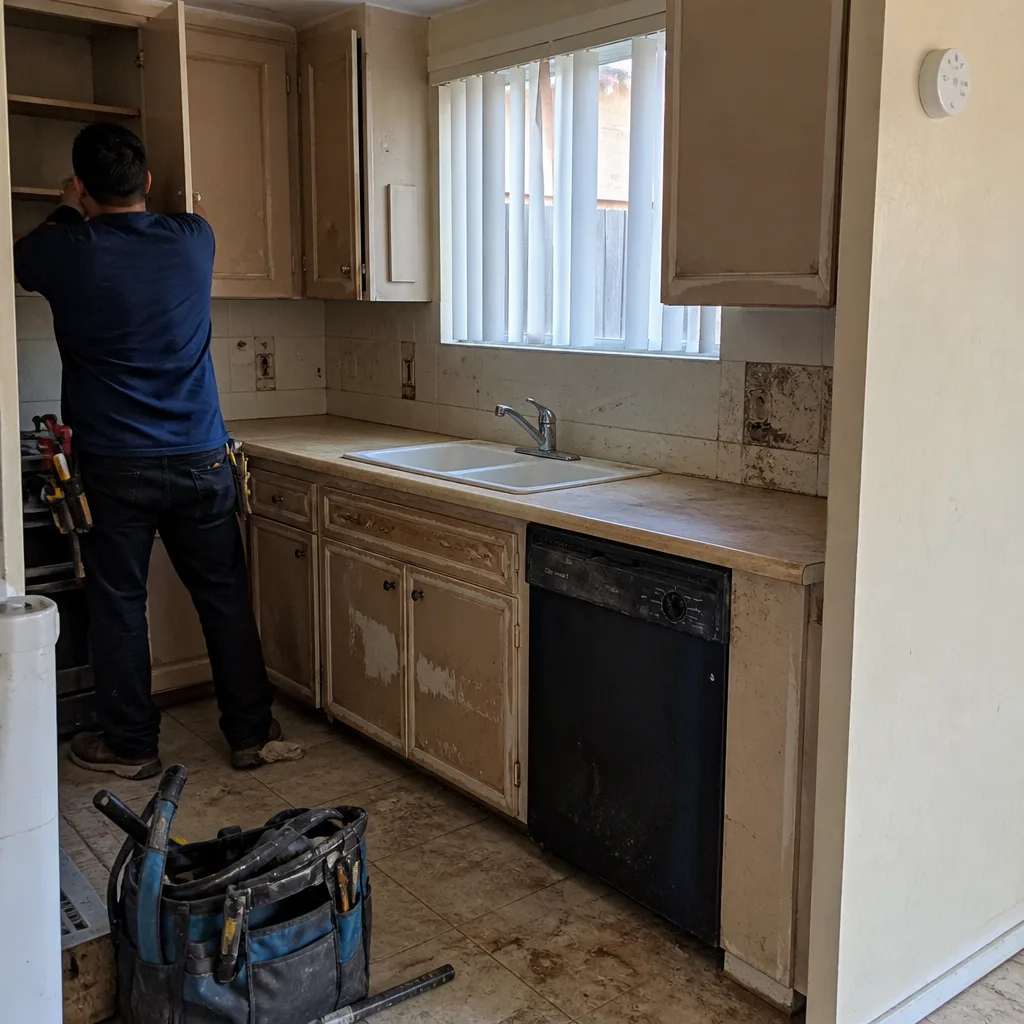 Before
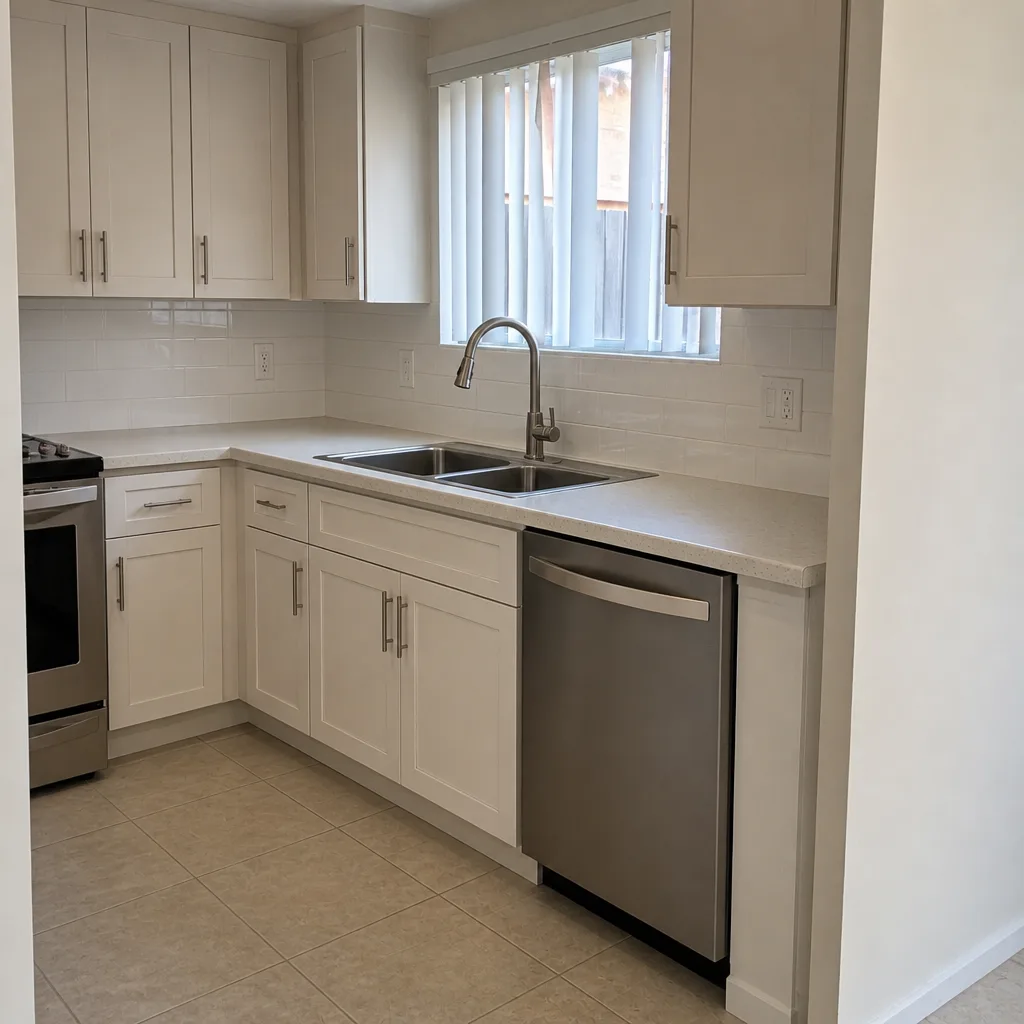 After
When to Call a Professional
Some remodels are ready to move forward, and some need a professional’s eyes before the first hammer swings. Call a professional if the contract you were handed doesn’t have a fixed price per line item, if the completion clause uses “substantial” without a date, if the change-order clause allows verbal authorization, or if you can’t find the subcontractors named in the paperwork. Call us if you’ve already signed and the first invoice came in 30 percent over the quote. Call us if the crew walked off the job, left unpermitted work behind, or if a lien notice landed on your door – those are recoverable with the right help, and they’re harder to fix at month six than month one. Bradford Remodeling Co Westminster offers free estimates in Westminster – call (833) 954-5086 and we’ll walk your paperwork with you before you commit. Same phone number, live person, any hour.
Frequently Asked Questions

The single biggest red flag is loose, undefined scope language – a line item that says “kitchen remodel” with no breakdown, paired with a change-order clause that lets work proceed without your signed approval. When the scope is vague, every conversation about what “included” means is a conversation you lose. A defensible contract lists each scope line with a fixed price and requires a written, homeowner-signed change order before any work outside the original scope begins.
No. Licensing, bonding, and insurance are three separate requirements in California, and a contractor can hold a valid license while having a lapsed bond or being exempt from workers’ comp under certain conditions. Licensing lets you file a complaint with the CSLB. The bond gives you access to a limited claim fund for specific violations. Insurance is what actually pays if someone is hurt or your house is damaged. Ask for the CSLB license lookup result, the bond number, and the certificate of insurance in writing, and verify each one independently.
You only know if you have their names and license numbers in the contract. Ask for both before signing. Then go to cslb.ca.gov and look each one up. A good contractor will name the subs and hand you the license numbers with the contract, and they’ll expect you to check. If the contract says “subcontractors TBD” or refuses to disclose, that’s a warning sign – you have no way to verify who is actually on your property or whether their work is covered.
It’s a five-step sequence: a bid 15-25 percent under everyone else, a scope that quietly omits line items, a contract with a loose change-order clause, a “surprise” during demo, and a change order signed under pressure because the project is already torn open. The final invoice lands 30-40 percent over the original quote. The defense is simple – insist on fixed price per line, a written change-order process, and milestone payments so you can walk if the playbook starts.
A manufacturer warranty covers the product – cabinet finish, door hardware, plumbing fixture cartridges – and comes from the brand. A workmanship guarantee covers the installation, which is the contractor’s responsibility. Both matter. Bradford’s 365-Day Done Right Promise is the workmanship side: if the installation fails within one year of completion, we come back and correct it at no charge. Cambria and Kohler warranties cover their material. The contractor guarantee covers the labor that installed it. Get both in writing.
Three steps, ten minutes total. First, run the license number on the CSLB site (cslb.ca.gov) and confirm the name matches, the class matches the work, the status is Active, and the bond is current. Second, request the certificate of insurance and verify the policy limits and workers’ comp status directly. Third, ask for the subcontractor names and license numbers in writing, then look each one up the same way. Any hesitation on those three requests is your answer before you’ve spent a dollar.
The Bottom Line
The warning signs that cost homeowners the most aren’t dramatic. They’re quiet clauses written into a contract you have five minutes to read on a Tuesday evening: time-and-materials pricing with no cap, “substantial completion” with no date, change orders authorized by a verbal yes, unnamed subcontractors, and an arbitration clause that ends your right to sue. Reading for those five things is the whole game. Get a written price per line item, get the sub names and license numbers, verify the bond and insurance on the CSLB site, tie payments to milestones, and confirm a lien waiver process. If you’d rather not read a contract alone, we’re happy to walk one with you before you sign – and every Bradford price is in writing before work starts, with a 365-Day Done Right Promise behind the installation. That’s The Garrison Standard. Our technicians have up to 22 years of experience, and we answer the phone around the clock.
Call (833) 954-5086 for a free estimate. We’ll read your paperwork, put a real number on the page, and tell you what the 365-Day Promise does and doesn’t cover – before the first tool comes out.
If you want to see how we structure a written scope on a kitchen, bathroom, or full-home job, start with our Bradford Remodeling Co Westminster home page, where the estimate process and the guarantee terms are laid out. For the trade side – what a by-the-book crew actually installs – see our general contractor page for Westminster, our bathroom remodeling service, and our kitchen remodeling detail on the site. Every page lists the brands we work with – Cambria, Silestone, Kohler, KraftMaid, Wellborn, GAF, James Hardie – so specs are traceable and quality is not left to guesswork.
Written by the team at Bradford Remodeling Co Westminster.