Last updated November 17, 2026







Free written scope consultation - allowances, timeline, and change-order rules on paper before a single trade is scheduled
General Contractor Warning Signs Every Homeowner Should Know
A contractor who asks for more than 10% or $1,000 down – whichever is less – is already violating California Business & Professions Code §7159. That’s not a soft warning sign. That’s a law they’re breaking before the first nail goes in. Most homeowners don’t know that number exists, which is exactly why the wrong contractor can ask for it and get it. We’ve watched this play out across Westminster, where older ranch homes and 1980s tract builds get remodeled constantly and the contractor pool runs from meticulous to outright dangerous. This guide names the specific behaviors and document gaps that predict a bad job, the trade reasoning behind each one, and how to verify compliance before you ever write a check.
Quick Answer
The warning signs that predict a bad contractor experience are visible before you sign: a deposit over 10% or $1,000 (whichever is less), a contract with no specific completion date, no itemized written price, a license that’s inactive or in the wrong classification, and pressure to skip the site measurement. Any one of these is a reason to walk. Two or more together means the job is already in trouble.
Styles & brands we work with
- Kitchen remodeling
- Bathroom remodeling
- Home additions & ADU
- Roofing
- Windows & doors
- Driveway & pavers
- Fence
Table of Contents
- The California Deposit Rule Most Homeowners Have Never Heard Of
- What a Contract Without a Completion Date Actually Means
- How to Verify a CSLB License Is Active, Bonded, and Correctly Classified
- Estimate-Phase Behaviors That Predict No-Shows and Scope Creep
- Why a Contractor Who Won’t Itemize Is a Contractor You Can’t Budget With
- Site and Crew Signals: What to Look For Before Work Starts
- What The Garrison Standard Puts in Writing to Close These Gaps
The California Deposit Rule Most Homeowners Have Never Heard Of
California caps what a contractor can collect upfront on most home improvement contracts. Under Business & Professions Code §7159.5, the down payment cannot exceed 10% of the contract price or $1,000, whichever is less. It also limits progress payments to the value of work actually completed. Those aren’t suggestions. They’re statutory limits, and a contractor who ignores them is either unfamiliar with the law or betting you won’t check.
Here’s what that looks like in practice. On a $60,000 kitchen remodel in Westminster, the legal maximum deposit is $1,000 – not $6,000, not $12,000. A contractor asking for a 30% deposit to “lock in materials” is asking you to fund their cash flow, not your project. We’ve seen homeowners in the Little Saigon area hand over $15,000 before demo day and then wait three weeks for a crew that never showed.
How to verify compliance before you sign:
- Ask for the deposit amount in writing and compare it against 10% of the contract total or $1,000, whichever is lower.
- Confirm the payment schedule ties each installment to a completed milestone – demo, rough-in, drywall, final inspection – not to a calendar date.
- Ask what happens to your deposit if the contractor doesn’t start. A compliant contract states the refund terms. A verbal “don’t worry about it” is not a contract.
- Never pay in cash. Pay by check or card so there’s a record if the job goes sideways.
If the deposit request is out of bounds, the rest of the contract deserves the same scrutiny. This is where a disciplined contractor separates from a disorganized one – it’s the reason every General Contractor in Westminster we work alongside puts the price in writing before a single tool comes out.
What a Contract Without a Completion Date Actually Means
A contract with no specific completion date is a contract with no enforceable deadline. Under California law, home improvement contracts must include an estimated completion date. When that language is vague – “work to be completed in a timely manner,” “approximately 6 – 8 weeks subject to weather” – the contractor keeps every option and you keep none.
This is a structural problem, not a formatting oversight. Vague timing language usually means the contractor runs multiple jobs and moves crews by convenience, not by schedule. In our experience, a job without a firm end date stretches by weeks. A kitchen that should take five weeks runs ten. You’ve torn out the old cabinets, you’re eating takeout, and the contractor has no legal exposure.
Look for these specifics in the timing section:
- A named start date and a named substantial completion date.
- A defined list of what counts as a delay (weather, permit holds, material backorder) and what doesn’t.
- A daily or weekly penalty clause for contractor-caused delays, or at minimum a documented process for recovering costs.
- A stated sequence – demo, rough-in inspection, drywall, finish, final walkthrough – so you know what “on schedule” means at each stage.
Westminster has its own timing realities. Permit turnaround through the city can run longer on structural work, and that should be factored into the schedule by the contractor, not absorbed by you. A firm that builds permit time into the calendar is a firm that has pulled permits in this city before.
How to Verify a CSLB License Is Active, Bonded, and Correctly Classified
Every contractor working a job over $500 in California needs an active license from the Contractors State License Board. But “licensed” is only the start. You need to verify three things: the license is active, it carries a current bond, and the classification matches your project type.
Not all Class B licenses cover all work. Class B (General Building) covers residential construction that involves two or more trades. A Class C-10 (Electrical) or C-36 (Plumbing) classification is required for specialty work done standalone. If you’re doing a whole-home remodel and the contractor only holds a specialty license, they may be legally barred from pulling the structural or mechanical permits your project needs. That gap often surfaces mid-project, when the city inspector asks for a signature the contractor can’t provide.
The verification steps, in order:
- Search the license number on the CSLB website and confirm status is “Active” – not “Expired,” “Suspended,” or “Cancelled.”
- Check the bond line item. A current contractor’s bond is required, and a lapsed bond means no financial backstop if the job fails.
- Confirm the classification matches your scope. Whole-home and kitchen work generally needs Class B. Electrical, plumbing, and HVAC each need their own classification if they’re stand-alone.
- Check for a workers’ compensation policy if the contractor has employees. A contractor with no employees doesn’t need one, but a crew without coverage is a liability exposure for you.
- Look up any disciplinary actions or complaints filed against the license. The CSLB publishes them.
We’ve seen Westminster homeowners skip this step because the contractor “seemed legit.” In our experience, a five-minute CSLB lookup prevents far more grief than any reference call. Do it before the estimate meeting, not after.
Estimate-Phase Behaviors That Predict No-Shows and Scope Creep
The estimate phase is a preview of the whole job. How a contractor behaves during the walkthrough, the follow-up, and the written quote tells you almost everything about how they’ll behave when the cabinets are torn out and the fridge is in the garage.
Watch for these behaviors during the estimate:
- Overpromising timelines. “We can start Monday and be done in two weeks” on a full kitchen remodel in Westminster is a red flag. Real remodeling has sequencing, inspections, and material lead times. A contractor who compresses the schedule is either planning to subcontract poorly or planning to leave your job half-finished while they chase the next one.
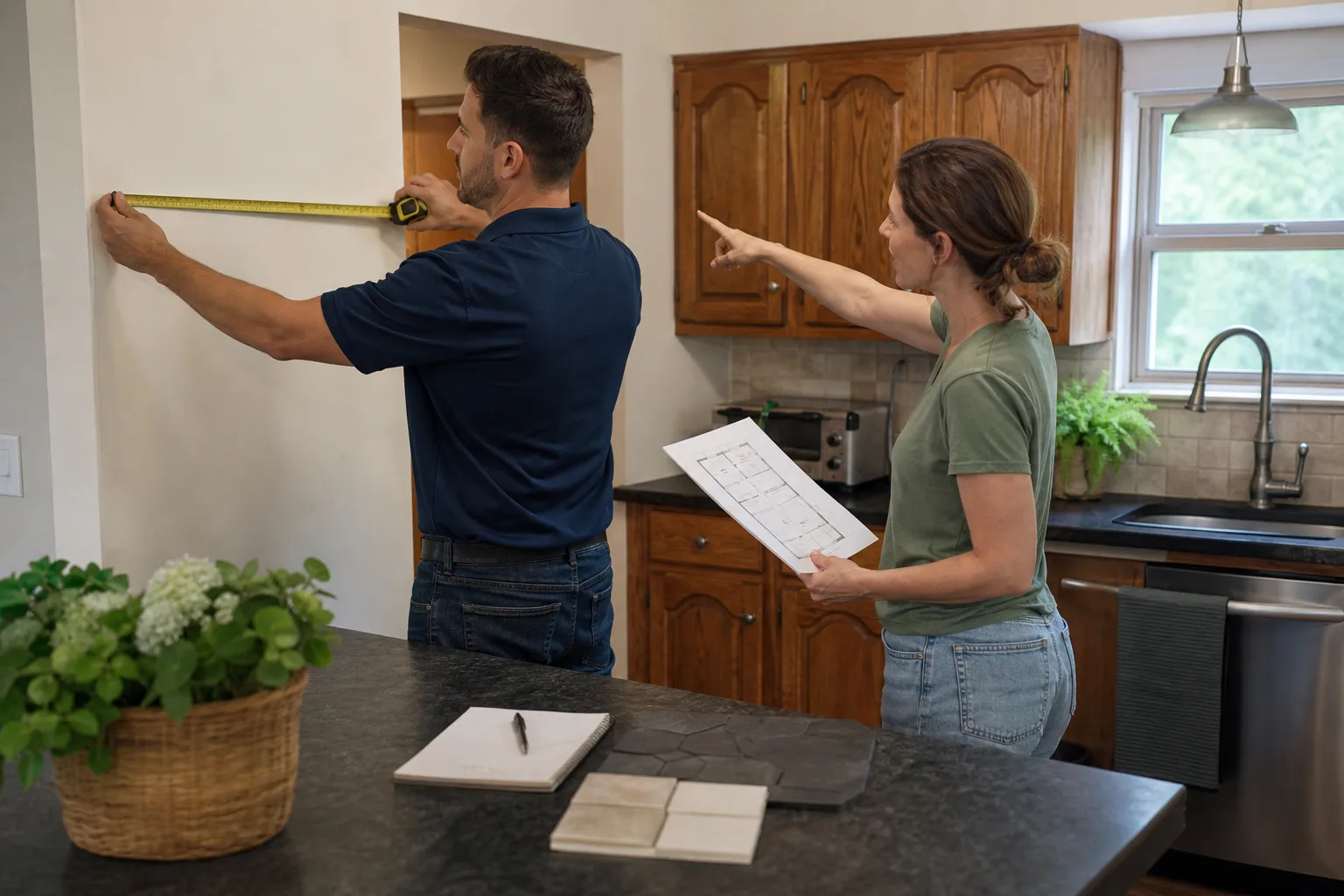
- Skipping site measurement. A quote delivered without a tape measure or a laser on-site is a guess. Cabinet runs, counter overhangs, window dimensions from Kitchen Remodeling in Westminster jobs where we’ve had to correct the last guy’s numbers – every one traced back to an estimate written from photos.
- Refusing to itemize. “It’s $55,000, everything’s included” is not a quote. It’s a number with no breakdown. You have no way to compare, no way to spot the missing permits, no way to know if the counter allowance is Cambria or builder-grade laminate.
- Pressure to sign on the spot. “The price goes up tomorrow” is a sales tactic, not a scheduling reality. Disciplined contractors give you the written quote and let you think.
- No follow-up documents. After a walkthrough, you should get a written estimate within a few days. Silence for a week then a sudden call is a sign of disorganization that will repeat.
We’ve watched a Westminster couple get quoted “about $40,000” for a kitchen. The final invoice was $61,000. The difference was never in writing because nothing was ever in writing.
Why a Contractor Who Won’t Itemize Is a Contractor You Can’t Budget With
An itemized written quote is the single most useful document you’ll hold during a remodel. It tells you what each phase costs, what’s included and excluded, and what materials are specified. Without it, you can’t compare bids, can’t dispute charges, and can’t plan around unknowns.
A good itemized quote names line items – demo, framing, rough plumbing, rough electrical, drywall, cabinets, countertops, tile, fixtures, paint, permits, labor. It states the brands and models specified. In Westminster, where kitchens in older homes often need new substrate under the tile because the original plywood has swelled, the quote should call out substrate repair as a line item or as a clearly defined allowance. Vague “miscellaneous” lines are where budgets blow up.
Here’s what to insist on:
- A line for permits, listing the permit fees separately from labor.
- Named material brands. Not “premium cabinets” – KraftMaid or Wellborn. Not “quartz” – Cambria or Caesarstone. Traceable specifications mean the contractor can’t swap down mid-job.
- A stated allowance for any line the contractor can’t finalize until demo, and a written rule for how overages get approved.
- Exclusions in writing. “Painting not included” and “landscape repair not included” belong on the quote, not in the contractor’s head.
We’ve sat across the table from Westminster homeowners holding a one-page quote with three numbers on it and asked them what the cabinets were. They didn’t know. That’s not their fault – it’s the contractor’s.
Site and Crew Signals: What to Look For Before Work Starts
Some of the most telling signs show up before the first hammer swings. The state of a contractor’s truck, the crew they bring to the walkthrough, and the condition they leave a job site each day say more than any brochure.
What to look for on the walkthrough and after:
- Unmarked vehicles and no introductions. A crew that arrives without name, without a marked vehicle, and without a business card is a crew you can’t hold accountable. Background-checked, uniformed technicians are standard on any job worth taking.
- No written scope on the wall. On day one, a disciplined crew posts a job schedule and a scope sheet where the homeowner can see it. If day one looks like a free-for-all, ask why.
- Debris left overnight. Daily cleanup is part of the job. A contractor who leaves a pile of drywall scrap in your living room overnight will leave a bigger mess at close.
- No photo documentation. Before-and-after photos and rough-in photos behind the drywall protect both sides if a warranty issue comes up later.
- Subcontractor churn. If the electrician, plumber, and tile setter all change from the subcontractor list on the contract, ask why. Substitutions often mean the original subs weren’t paid.
In our experience, a Westminster job site that looks squared away on day two will look squared away on close day. The reverse is also true. If your gut says the site is disorganized, document it in writing and ask the contractor to address it. If the site stays disorganized, the paperwork will too.
What The Garrison Standard Puts in Writing to Close These Gaps
The Garrison Standard is the operating framework Bradford Remodeling applies to every job, and it exists specifically to eliminate the gaps above. It’s held across the Garrison Partners family, which established in 2004 and operates each location as an independently owned and operated business held to the same standard.
Here’s how the standard maps to the warning signs in this guide:
- Deposit and progress payments. The written price comes before any work starts, and the payment schedule is set against completed milestones, not calendar dates. There are no numbers that move at the door.
- Completion dates. Every contract states a substantial completion date and names the sequencing – demo, rough-in inspection, drywall, finish, final walkthrough.
- Itemized scope. Every quote itemizes labor, materials, permits, and allowances. Named brands – KraftMaid, Wellborn, Cambria, Kohler, GAF, James Hardie – so specifications are traceable and quality is not left to guesswork.
- Crew identity. Background-checked, uniformed technicians on every job. Identity and conduct standards set at the Garrison Partners level, not left to individual job sites.
- Live-person coverage. Calls are answered by a live person, not a voicemail queue, around the clock.
- 365-Day Done Right Promise. Every completed project carries a full-year written guarantee. If the work fails inside that window, Bradford comes back and corrects it at no charge.
The uniform and the written guarantee both matter, but the guarantee is the part homeowners can hold. A written one-year warranty is the difference between a contractor who stands behind the work and a contractor whose phone number stops working after the final invoice. For a bathroom remodel, that means the Bathroom Remodeling in Westminster work and the tile setting behind it come with a written term you can point to if a shower pan fails six months later.
That framework is the whole point. Where most remodelers ask you to trust them, The Garrison Standard gives you that trust in writing, and the Bradford Remodeling Co Westminster home is built on that discipline.
Common Mistakes to Avoid
- Paying a deposit over the legal limit. The 10%-or-$1,000 cap under California B&P §7159.5 is a real number. A contractor who asks for 30% or 50% down is either breaking the law or trying to. Walk away and find someone who knows the code.
- Signing a contract without a completion date. “We’ll get it done as soon as we can” is not a schedule. Any job without a stated substantial completion date and delay process means you have no leverage when the job stalls at Westfield.
- Accepting a one-page quote. A single-line price with no breakdown of labor, materials, and permits is un-comparable and unenforceable. Insist on itemization in writing before you sign anything.
- Skipping the CSLB lookup. A contractor can seem competent in person and have a suspended license on file. Check license status, bond currentness, and classification before the first estimate meeting – especially on whole-home work where the wrong classification means permits won’t pass.
- Leaving a verbal scope change unrecorded. When the contractor says “we’ll throw that in,” write it into a change order with a date and a signature. Verbal changes are how Westminster homeowners end up paying for work they thought was free.
- Paying in cash for a discount. A cash discount usually means no paper trail. Pay by check or card so you can prove what you paid if the work fails or a dispute gets filed.
- Ignoring the crew’s identity on day one. If you can’t name who’s in your house, you don’t know who’s in your house. Background-checked, uniformed technicians should always introduce themselves and carry credentials.
See the difference
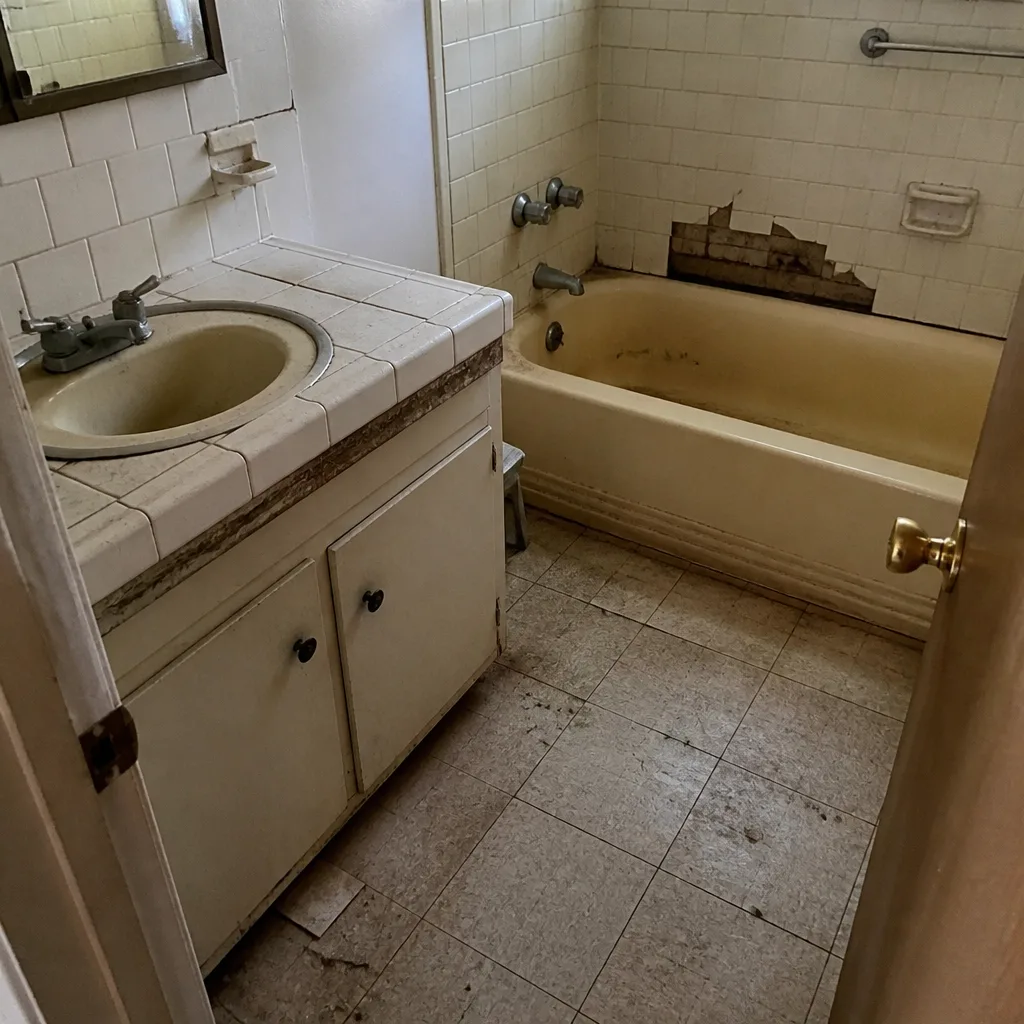 Before
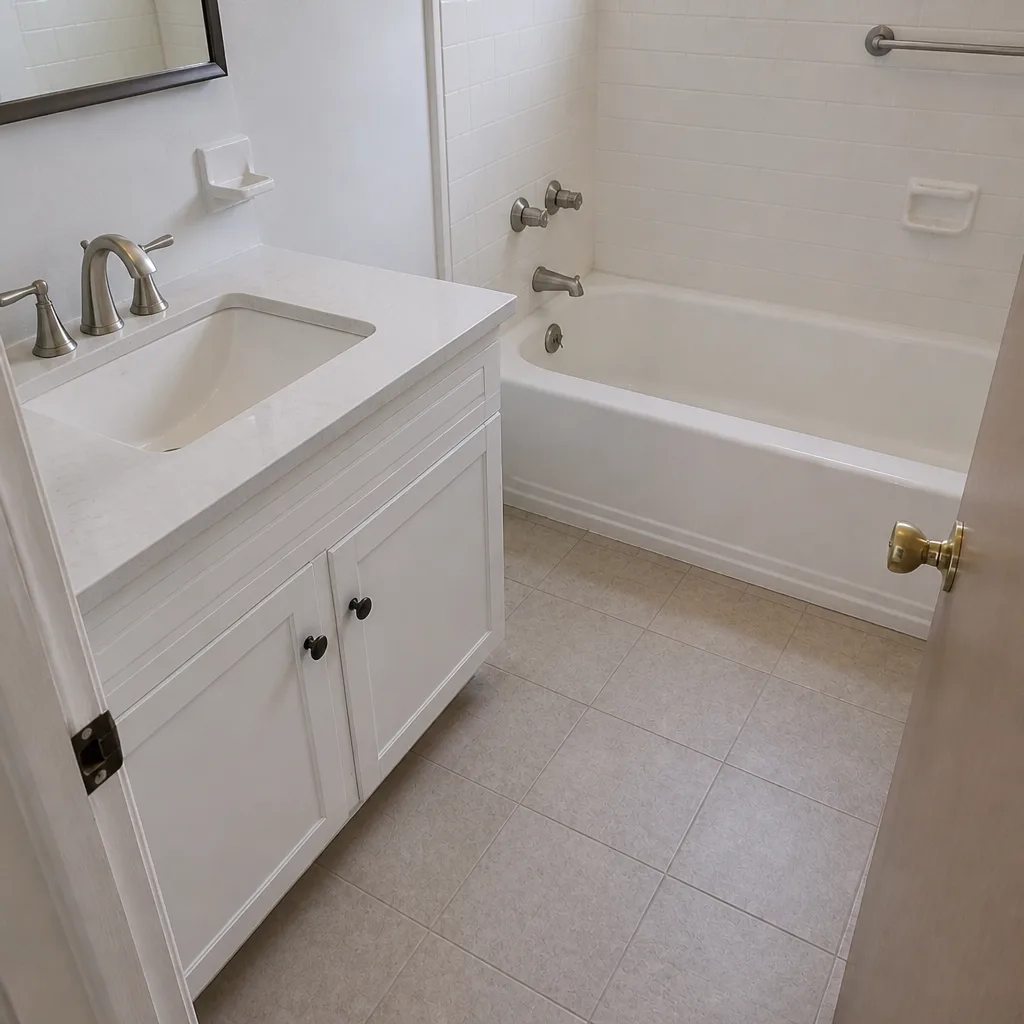 After
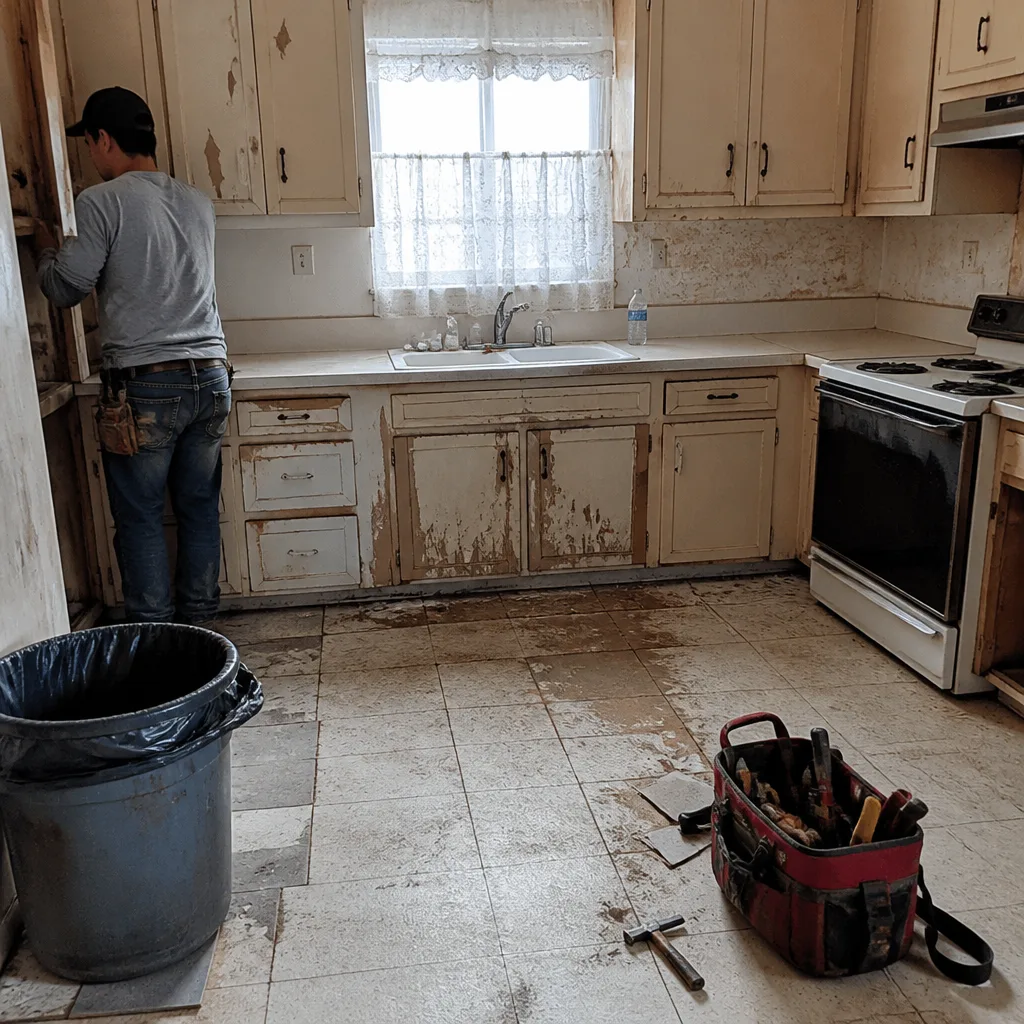 Before
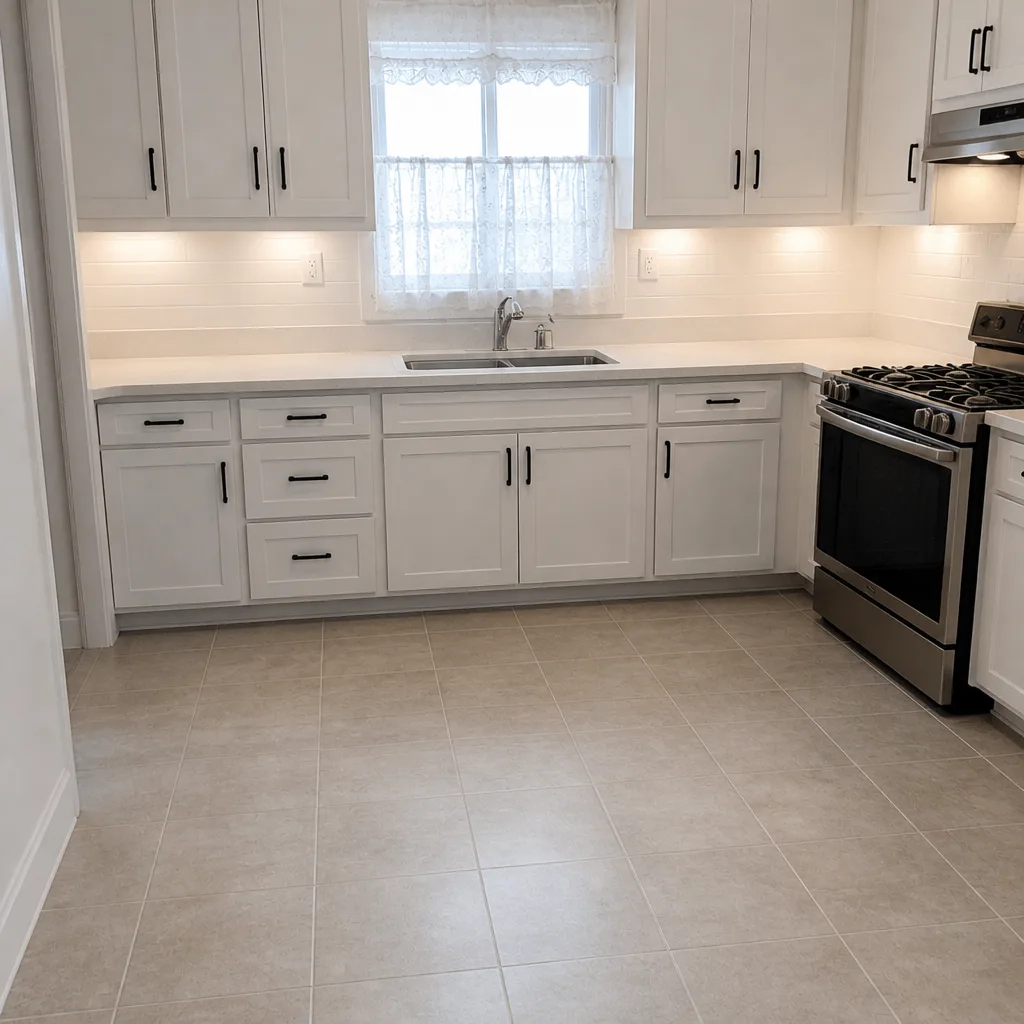 After
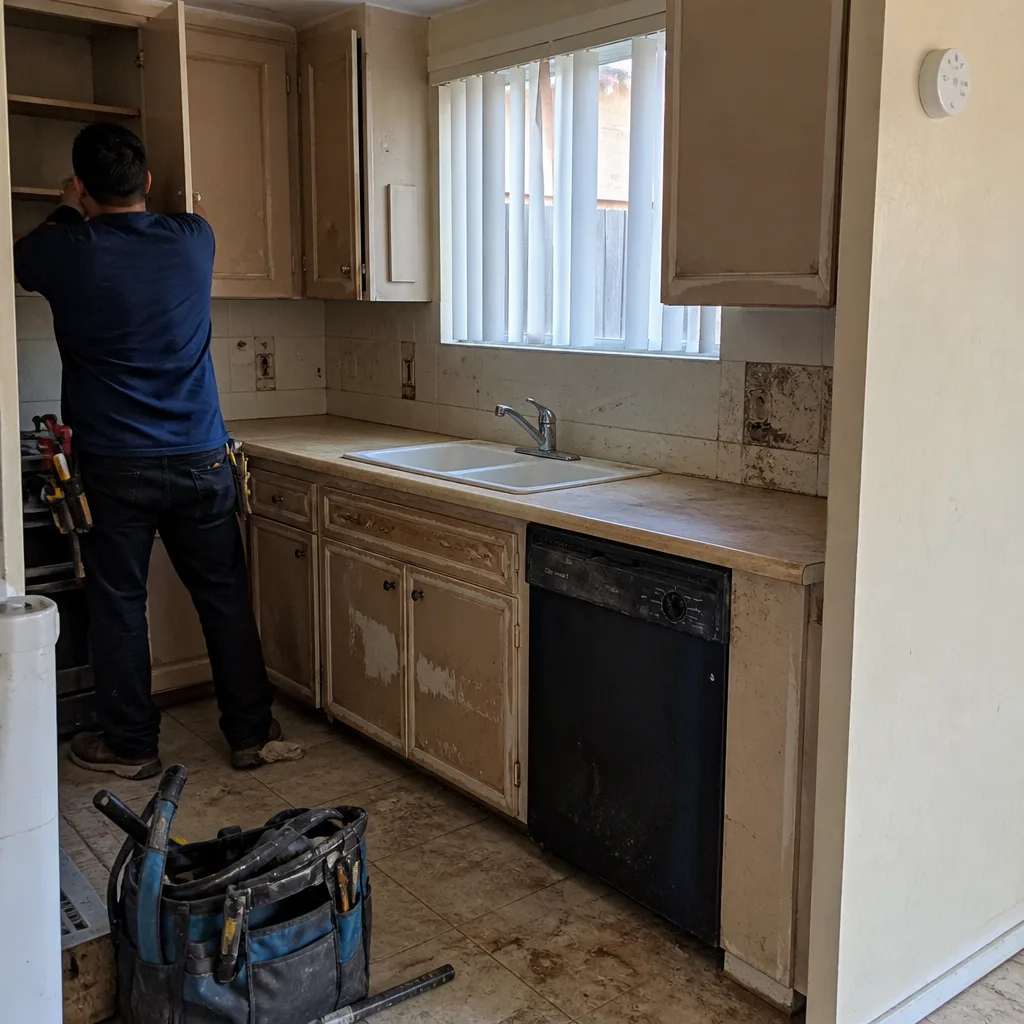 Before
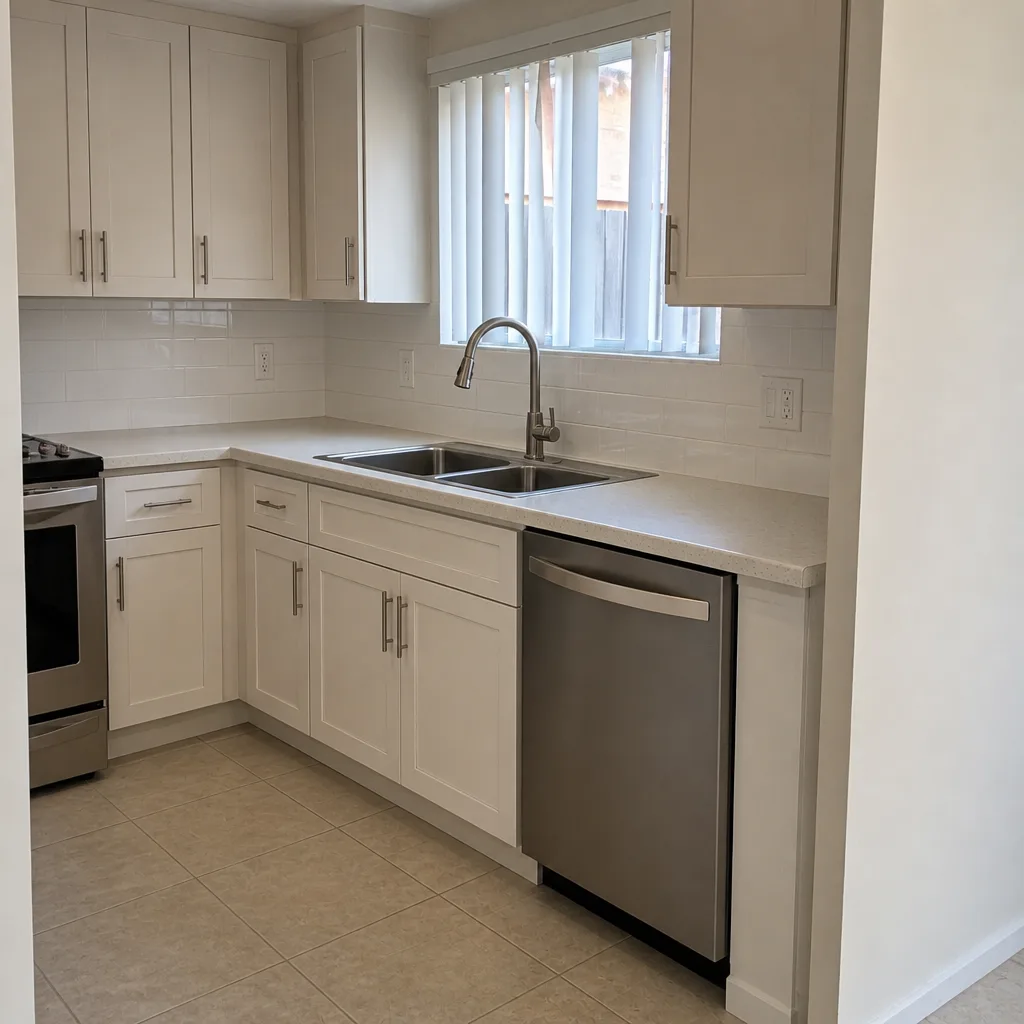 After
When to Call a Professional
Call a licensed contractor any time the work touches structural elements, electrical, plumbing, gas, or permits. That includes kitchen and bath remodels, adding a room, opening a wall to move a load-bearing header, replacing a shower pan, and any project that requires a city inspection in Westminster. High-tension work – garage door springs, panel replacement, gas line work – should only ever be handled by a licensed specialty contractor, and no one should attempt to adjust or replace these components without training; the springs and cables alone can cause serious injury when they release.
Bradford Remodeling Co Westminster offers free estimates in Westminster. Every estimate comes with a written price and an itemized scope, and every completed project carries the 365-Day Done Right Promise. Call (833) 954-5086 to schedule your free estimate.
Frequently Asked Questions

The single biggest warning sign is a deposit request above 10% of the contract price or $1,000, whichever is less. That exceeds California’s legal cap under Business & Professions Code §7159.5, and a contractor asking for it is either unfamiliar with the law or betting you won’t check. This one flag is worth walking away over before you sign. Call (833) 954-5086 for an exact quote – estimates are free.
Search the license number on the CSLB website and confirm three things: the status is Active, a current contractor’s bond is on file, and the classification (Class B, C-10, C-36) matches your project type. Whole-home and kitchen remodels generally require a Class B license. If the license is suspended, expired, in the wrong classification, or missing a bond, don’t sign. Call (833) 954-5086 to schedule a free estimate with a crew that will show you the paperwork before you ask.
No. California caps the down payment at 10% of the contract price or $1,000, whichever is less, and limits progress payments to the value of work actually completed. A contractor asking for 25% or 30% down on a Westminster remodel is outside the law. Ask for the payment schedule in writing and confirm each installment ties to a completed milestone, not a calendar date. Call (833) 954-5086 – our written price and milestone schedule come standard.
A compliant remodeling contract should include a written total price, an itemized scope, named material brands, a start date and substantial completion date, a defined process for handling delays, the permit responsibility line, a milestone-based payment schedule, and a written warranty term. If any of these are missing, the contract is incomplete. Bradford provides each of these in every written quote. Call (833) 954-5086 to start with the written scope.
A full kitchen remodel in Westminster typically runs five to eight weeks, and a bathroom remodel runs three to five weeks, depending on permit turnaround, material lead times, and whether structural or plumbing changes are involved. A contractor who quotes significantly shorter timelines without explaining their sequencing is overpromising. The written contract should state a substantial completion date. Call (833) 954-5086 for a realistic timeline in writing.
The 365-Day Done Right Promise is a written guarantee that covers every completed project for a full year after substantial completion. If the work fails inside that window – a shower pan that leaks, a cabinet door that won’t close properly, a finish that peels – Bradford returns and corrects it at no charge. It’s the written counterpart to the work, and it’s standard on every project. Call (833) 954-5086 to get your written guarantee terms up front.
The Bottom Line
Bad contractor experiences are almost never surprises. The behaviors that predict them – a deposit outside California’s legal cap, a contract without a completion date, a license that’s inactive or misclassified, a quote that won’t itemize, a crew that shows up unmarked – are visible before the contract is signed. Check the CSLB file, read the payment schedule, ask for the completion date in writing, and never pay cash. We hold every Bradford job to The Garrison Standard for exactly this reason: the price, the scope, the schedule, and the one-year guarantee all land in writing before the first tool comes out. If your current contractor can’t produce those, call (833) 954-5086 for a free written estimate from Bradford Remodeling Co Westminster.
Written by the team at Bradford Remodeling Co Westminster.