Last updated November 17, 2026


Free written scope consultation - allowances, timeline, and change-order rules on paper before a single trade is scheduled
DIY vs Professional Home Remodeling: What’s Safe to Do Yourself
The right question about DIY remodeling isn’t “do I have the skills?” It’s “does this work require a permit, and what happens to my homeowner’s insurance if I pull it myself?” In California, unpermitted DIY electrical or structural work doesn’t just risk a fine. It can make your home uninsurable and hard to sell, and your homeowner’s policy may deny a fire claim if unlicensed work is involved. We’re a Westminster remodeling contractor, and we’ve watched homeowners save $4,000 on a DIY panel job and then lose a $60,000 insurance claim over it. This guide sorts remodeling tasks three ways – safe, risky, and never – by permit requirement and insurance consequence, not just by skill level.
Quick Answer
Cosmetic work that doesn’t touch plumbing, wiring, or structure – painting, tiling a backsplash, swapping a faucet, replacing cabinet hardware – is safe to do yourself. Anything requiring a permit in Westminster or Orange County (moving walls, panel upgrades, new circuits, plumbing relocations, structural changes) should go to a licensed professional, because the permit, the inspection, and your insurance coverage all depend on it. The dividing line isn’t confidence. It’s whether a city inspector needs to sign off and whether your insurer will pay out later if the work fails.
Styles & brands we work with
- Kitchen remodeling
- Bathroom remodeling
- Home additions & ADU
- Roofing
- Windows & doors
- Driveway & pavers
- Fence
Table of Contents
- The Three-Column Matrix: Safe DIY, Risky DIY, Never DIY
- Permit Triggers in Westminster and Orange County
- The Insurance Gap Nobody Warns You About
- The Finish Work Trap
- Straight Cost Comparison: DIY vs Licensed Labor in Westminster
- Where DIY Actually Pays Off
- Common Mistakes to Avoid
- When to Call a Professional
The Three-Column Matrix: Safe DIY, Risky DIY, and Never DIY
Most DIY guides sort tasks by difficulty. That’s the wrong axis. A difficult tile installation won’t burn your house down or void a claim; a “simple” outlet swap on an overloaded circuit can do both. Here’s how we sort remodeling work for homeowners in Westminster, and why.
Safe DIY (No Permit, No Insurance Consequence)
- Interior and exterior painting (no lead paint pre-1978 without testing)
- Swapping kitchen or bath faucets with existing supply and drain connections
- Replacing cabinet knobs, pulls, and hinges
- Installing peel-and-stick backsplash tile or luxury vinyl plank over a clean substrate
- Caulking, grouting touch-ups, and weatherstripping
- Patching drywall and swapping light fixtures on a switch-controlled circuit (no new wiring)
- Closet organizers, shelving, and freestanding storage
Risky DIY (Permit May Apply, Insurance Gap High)
- Tile shower membranes and pans – small errors leak behind the wall for years
- Cabinet installation and refacing – water lines and cabinetry overlap often
- Drywall removal to open a wall (you don’t know what’s behind it until you do)
- Flooring over slab with moisture issues – common in older Westminster homes built on grade
- Deck building or repair – load calculations apply, and a failed railing is a liability
- Dishwasher and garbage disposal swaps – usually fine, but not always if a new circuit is needed
Never DIY (Permit Required, Health and Safety Stakes)
- Electrical panel upgrades, new circuits, or any work inside a service panel
- Moving or removing a load-bearing wall
- Rough plumbing (relocating supply or drain lines, re-piping, water heater replacement)
- Gas line work of any kind
- Structural framing, foundation, or roof replacement
- Any work that shifts a wall, door, or window opening in a load path
Permit Triggers in Westminster and Orange County
Westminster’s permit rules aren’t unusual for Orange County, but they’re stricter than most national DIY guides assume. The triggers we see most often:
- Any load-bearing change. Remodeling a kitchen that involves opening a wall? If the wall carries roof or second-floor loads, you need a permit and usually a structural drawing stamped by an engineer or architect.
- Electrical panel upgrades or replacements. A panel swap always requires a permit and inspection in Westminster. So does adding a dedicated circuit for a new range, wall oven, or EV charger.
- Any plumbing relocation. Moving a sink, toilet, or shower drain requires a plumbing permit and inspection. Swapping the fixture at the same connection usually doesn’t.
- Water heater replacement. Even a like-for-like swap requires a permit – the inspection confirms seismic strapping and venting.
- Any work that shifts a wall. Adding a door, widening a doorway, or removing a partial wall all trigger plan review if structural.
- Windows and sliding doors in some cases – egress and safety glazing come into play, particularly on bedrooms.
The honest rule for Westminster homeowners: if the work touches wiring, gas, water under pressure, or structure, assume a permit. If it’s cosmetic and sits on top of what’s already there, assume you don’t. When you’re unsure, the city building department will answer that question for free.
The Insurance Gap Nobody Warns You About
Most DIY guides talk about resale value. Insurance is the bigger risk, and it hits sooner. Here’s what happens at claim time when unpermitted or unlicensed work is on the books.
- Fire claims can be denied. If your insurer determines the fire started in a circuit you wired yourself without a permit, they may deny the claim entirely. Not reduce it – deny it.
- Water damage exclusions. A shower pan you installed that leaked into the subfloor can be excluded from coverage as faulty workmanship. The homeowner eats the entire bill for the subfloor, drywall, and mold remediation.
- Policies can be non-renewed. Some carriers inspect homes periodically, and unpermitted structural work is grounds for non-renewal at the next policy cycle.
- Resale disclosures. California requires you to disclose known unpermitted work at sale. Buyers walk, lenders balk, and retroactive permits cost more than the original work.
- Liability exposure. If a houseguest is hurt on a deck you built that fails, your policy may cover injury but pursue you for the unpermitted construction that caused it.
We’ve seen it happen in Westminster – a homeowner who saved $2,800 doing his own kitchen electrical, then had a small fire in the wall behind the range during a holiday dinner. The fire was contained fast. The claim wasn’t paid. That’s the conversation that should happen before the YouTube video, not after.
The Finish Work Trap
This is the one we see most often, and it costs homeowners more than any other DIY decision. The pattern: a homeowner handles the rough work (framing, plumbing, electrical) themselves to save money, then hires a licensed sub for the finish work (tile, cabinetry, drywall finishing). The sub arrives, inspects the rough work, and refuses to proceed.
Why? A licensed contractor takes on liability for everything they cover. If a plumber sets a shower valve against rough plumbing that isn’t to code, the plumber owns the leak when it fails. No licensed trade will set their name to work that could be traced back to a rough-in they didn’t control. They’ll quote you to open the walls, correct the rough work, re-inspect, and only then finish. That correction quote often costs more than the rough work would have under a single licensed contract.
The trap also runs the other way. Homeowners who complete finish work themselves over licensed rough work sometimes void the rough-work warranty on the covered portion. If you have a plumber rough in a bath and you set the tile, a leak at the valve can fall between the plumber’s scope and yours. This is exactly why, in our kitchen and bath work in Westminster, we always quote rough and finish together or not at all. See our Kitchen Remodeling in Westminster page for how the full scope is priced in writing.
Straight Cost Comparison: DIY vs Licensed Labor in Westminster
Here’s what the real numbers look like in this market. “DIY cost” includes materials at retail, tool rental, permit fees you’ll need anyway, and a realistic allowance for rework – which is where most DIY budgets fail. “Licensed cost” includes materials at contractor pricing, labor, permits, inspection, and the written guarantee that comes with a professional job.
Representative 2025-2026 Westminster Costs
- Bathroom faucet replacement: DIY $150-$300 in parts and one Saturday. Licensed $150-$250 in labor for installation plus a written guarantee. DIY wins if you’re comfortable under the sink.
- Interior painting, 1,200 sq ft: DIY $600-$1,100 in paint, tape, and rollers. Licensed $2,000-$3,900. DIY wins clearly, unless ceilings are vaulted or the home predates 1978.
- Tile shower replacement: DIY $2,000-$3,500 in materials plus tool rental. Licensed $7,500-$14,000. This is where DIY quietly loses – a failed pan costs $6,000 to $10,000 to correct.
- Kitchen electrical panel upgrade: DIY not advised; permits require a licensed electrician in practice. Licensed $2,500-$4,800. This is a fixed line item, not a savings opportunity.
- Cabinet refacing: DIY kit $1,800-$3,400 plus four weekends. Licensed $9,000-$18,000 depending on door and drawer count and whether surfaces are Cambria or standard laminate. Refacing over existing boxes is a middle-risk DIY, but won’t be warrantied by a professional.
- Full kitchen remodel: DIY $15,000-$30,000 in materials plus 4-8 months of your time. Licensed $65,000-$140,000 depending on scope and finishes. The DIY number looks better until you price your own weekends.
The honest takeaway: DIY saves the most on cosmetic work and the least on anything with a permit attached. Once you add tool rental, retail material markup, and a realistic rework allowance (we see 20-30% on tile and cabinetry), the gap between DIY and licensed narrows on complex jobs and can flip entirely on anything structural or wet.
Where DIY Actually Pays Off
We’re a remodeling company, so you’d expect us to say “hire everyone.” We don’t. Some work is genuinely better done by the homeowner, and pretending otherwise wastes your money. Here’s where DIY wins honestly:
- Painting. Labor is 60-70% of a painting bill. You can do it well with care.
- Hardware and cosmetic swaps. Cabinet pulls, bath accessories, light fixtures with existing wiring, switch plates.
- Demo day. Getting a demo permit and tearing out old cabinets, flooring, or tile earns real savings and moves the project forward. Have it quoted as a line item so the pro knows what’s coming.
- Tile backsplash over a proven flat substrate. Wall-area tile is far more forgiving than shower floor tile.
- Landscaping and fencing. Not structural fencing, but standard height, and never anything over the height that triggers a permit.
The consistent pattern: DIY pays off when the work sits on top of the finished surface. It doesn’t pay off when the work IS the surface, the structure, or the wiring behind it. Our Bathroom Remodeling in Westminster team sees the flip side of the DIY-favorable list every week – a homeowner who pulled tile and found rotted subfloor, and now needs licensed help anyway with the wall half-open.
Common Mistakes to Avoid
- Skipping the permit “just this once.” Westminster permits are public record. A future buyer’s inspector will find unpermitted work, and retroactive permitting after the fact costs more and requires opening finished surfaces. Pull the permit.
- Trusting YouTube for anything electrical. The videos show a panel from 1970s Atlanta on a 15-amp circuit. Your Westminster home may have aluminum branch wiring, a subpanel you haven’t opened, or a 100-amp service already at capacity. Every electrical remodel starts with a load calculation, not a video.
- Pulling a permit in your own name for major work. When you owner-build, you absorb the liability and the inspection responsibility. If the work fails, the correction is entirely on you. That’s the trade most homeowners don’t see until they do.
- Doing rough work and hiring a pro for finish. We covered this above, but it bears repeating – a licensed sub will not finish over rough work they didn’t control. It’s the most expensive mistake we see in Westminster remodels.
- Ignoring Orange County’s coastal moisture. Even inland Westminster homes see seasonal humidity swings that punish improper tile, paint, and drywall work. Marine layer mornings and dry afternoons are a slow test cycle for anything that isn’t specified properly.
- Buying materials before confirming the spec. Cabinets bought off-spec (even premium brands like KraftMaid) get returned at a restocking fee if the door swing or finish depth doesn’t fit the wall. Measure twice, then get the spec confirmed by someone who’s installed hundreds.
- Underestimating rework cost. Budget 20-30% on any DIY finish work. If the total still looks like a win versus a written quote, DIY is probably the right call.
See the difference
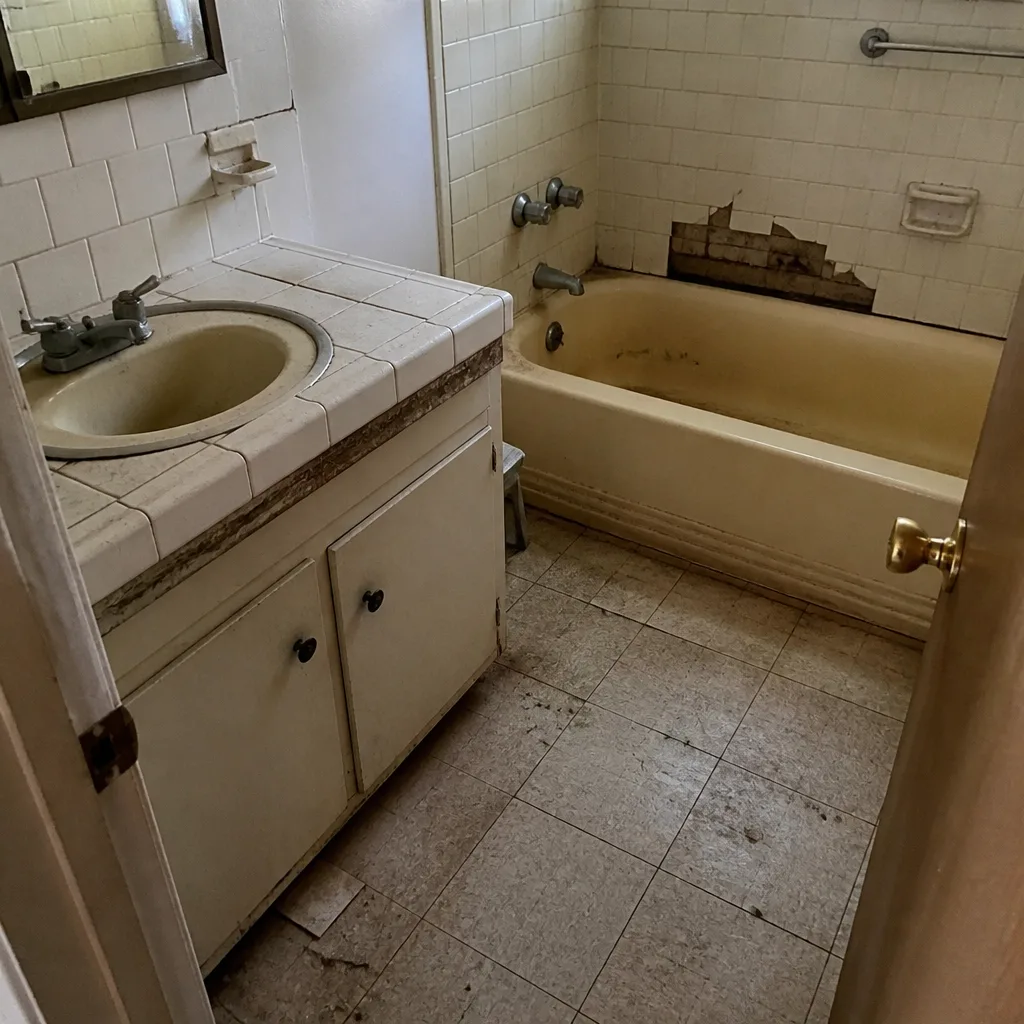 Before
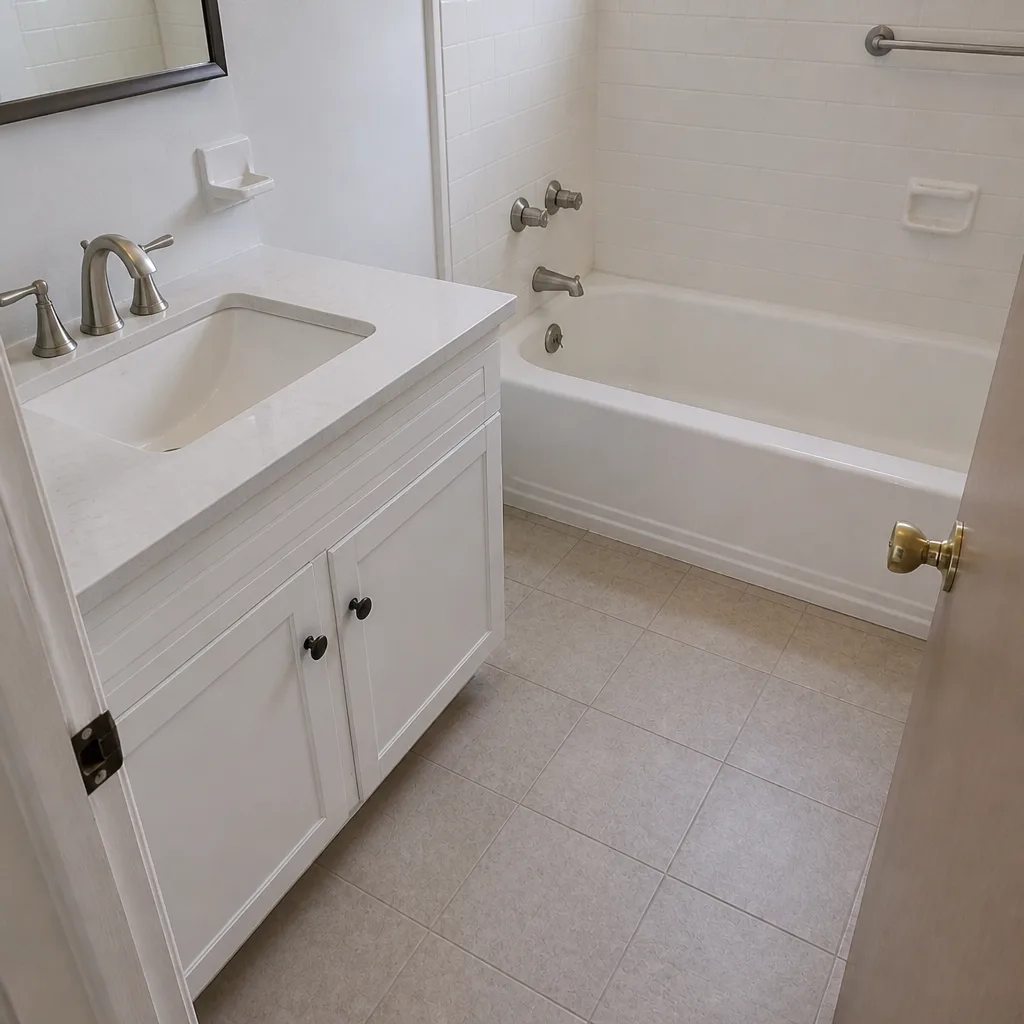 After
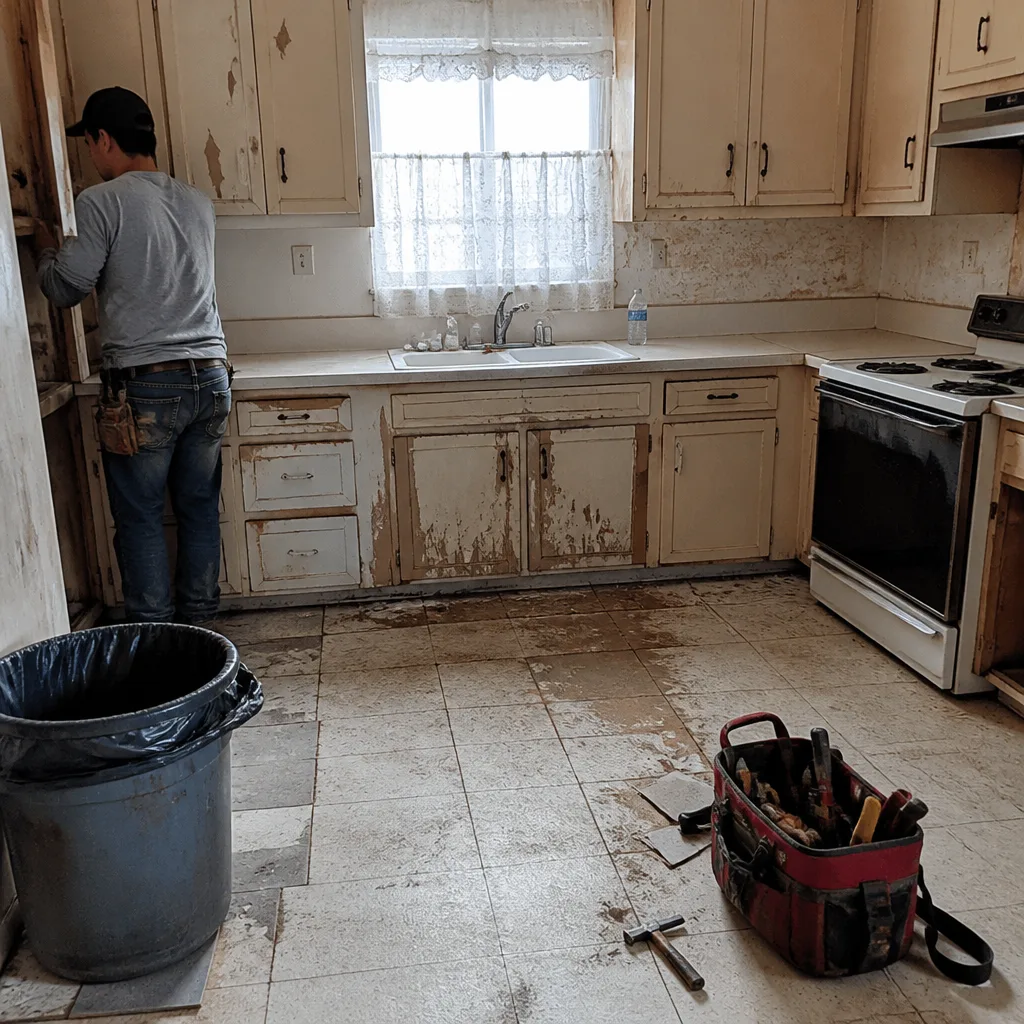 Before
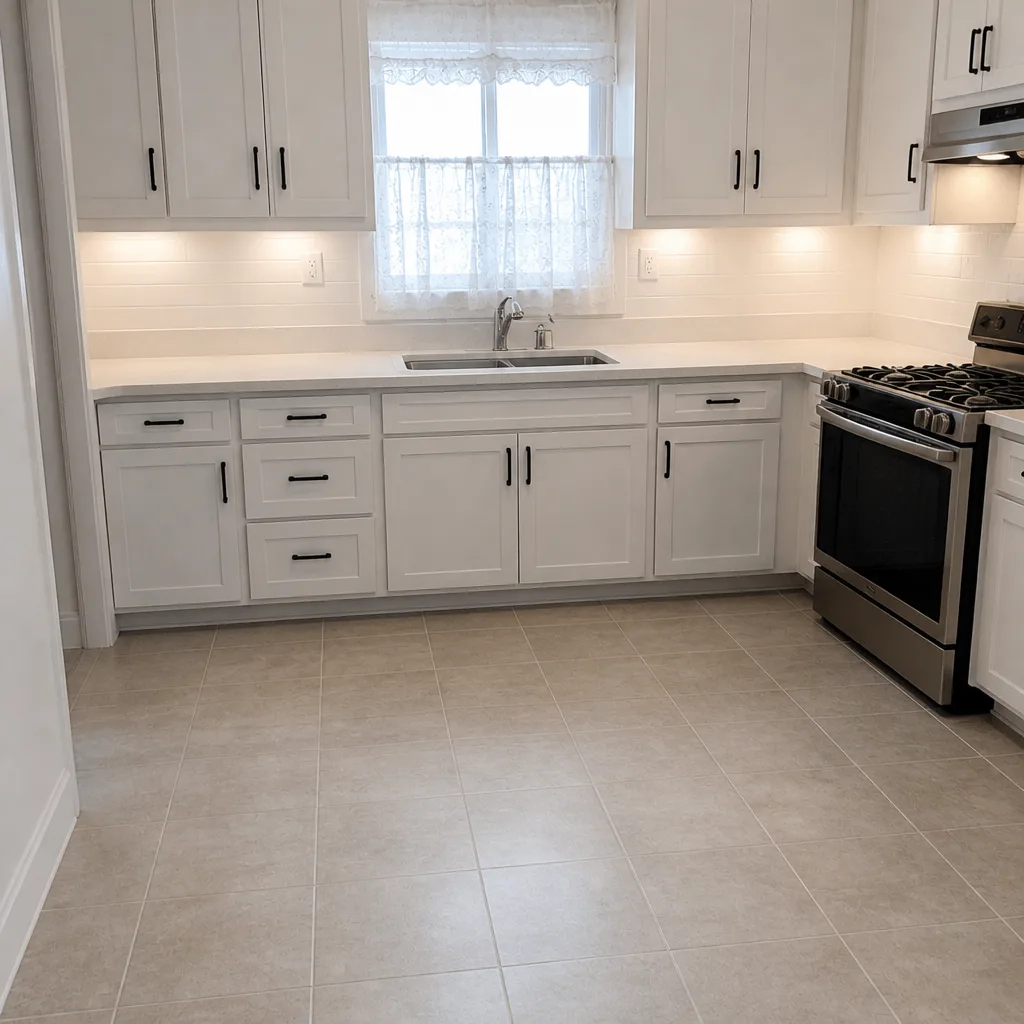 After
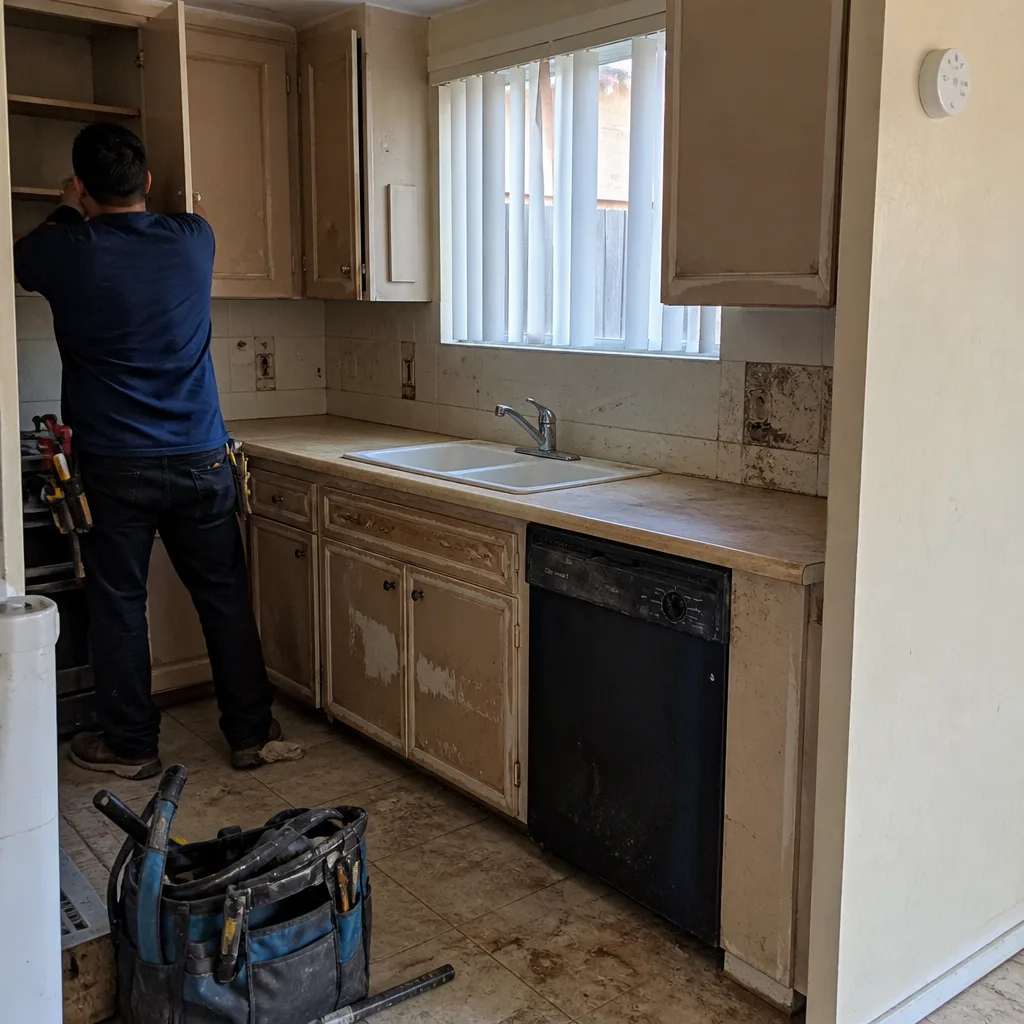 Before
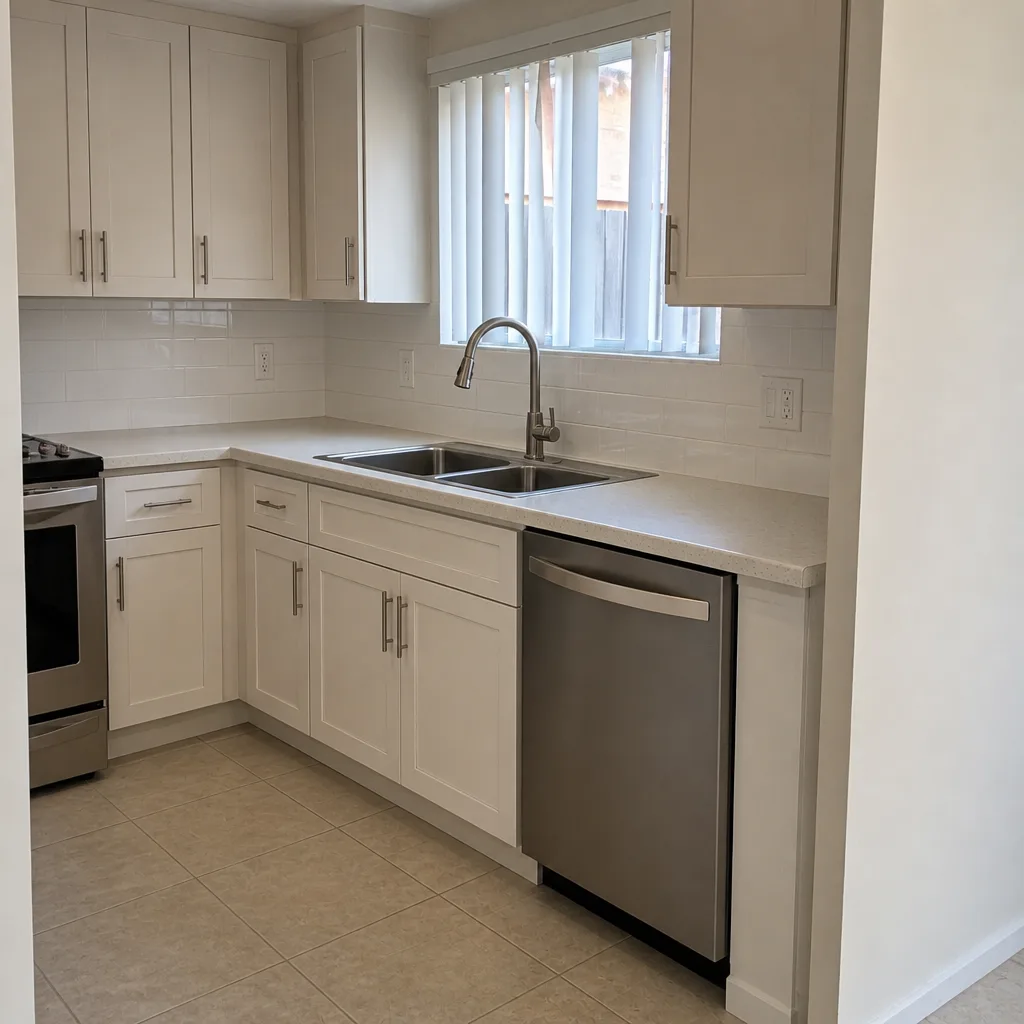 After
When to Call a Professional
Call a professional when the work requires a permit, when it touches gas, panel, structure, or rough plumbing, or when you can’t afford the rework allowance if it fails. Also call when the finish work depends on getting the rough work inspected – because nobody will cover you otherwise. Bradford Remodeling Co Westminster offers free estimates in Westminster, and we quote the whole scope in writing before any tool comes out. That includes the permit line, the inspection line, and every material spec by brand and model, so you’re never guessing what a written price actually covers. Our trucks aren’t the point – the paperwork is. Call (833) 954-5086 to schedule yours.
Frequently Asked Questions

Yes, if the work involves electrical, plumbing, gas, or structural changes – which covers most kitchen remodels. Cosmetic work (paint, new cabinet hardware, standard fixture swaps at existing connections) generally doesn’t require a permit. When in doubt, call the Westminster building department; they’ll answer for free, and it’s cheaper than finding out at resale.
Your insurer may deny the claim entirely. Most California homeowner policies exclude damage from unpermitted or unlicensed work, and a fire investigation that traces the origin to unpermitted wiring is a common denial trigger. Call (833) 954-5086 for a free estimate on permitted electrical remodeling – it’s cheaper than losing a claim.
Usually not. Licensed trades carry liability for the surfaces they cover, so most won’t set tile or finish drywall over rough work they didn’t perform or inspect. Expect to open the walls, correct the rough work, and re-inspect – which often costs more than having done the rough work under a single licensed contract. Call (833) 954-5086 for a free estimate on the full scope.
On a wall tile backsplash, typically $800-$1,800 in labor dollars – worth DIY. On a shower pan or floor tile, the answer is usually nothing after rework: a failed pan costs $6,000-$10,000 to correct, more than the labor it saves. If tile is a big scope reduction, call (833) 954-5086 for a free estimate that separates tile from the rest of the bath.
Yes, California allows owner-builder permits for work on your primary residence. The catch: you take on the inspection responsibility, the liability for the work, and the correction cost if it fails inspection. Most homeowners find the trade isn’t worth it once they see what a failed inspection derails. A written quote from a licensed contractor bundles the permit and inspection into the scope.
We install a documented roster of premium brands – KraftMaid and Wellborn cabinetry, Cambria and Caesarstone surfaces, Kohler and Moen fixtures, GAF and James Hardie exterior products – with a written price before work begins and the 365-Day Done Right Promise covering every completed project for a full year. If something we built fails inside that window, we return and correct it at no charge. See our General Contractor in Westminster page for full scope, or call (833) 954-5086 for a free estimate.
The Bottom Line
The DIY-versus-professional question is really a permit-and-insurance question. Cosmetic work – paint, hardware, backsplash, fixture swaps – is safe to do yourself and saves real money. Anything touching structure, wiring, gas, or rough plumbing requires a permit and should go to a licensed professional, because the permit, the inspection, and your insurance claim all depend on it. Doing rough work yourself to hire a sub for finish work is the trap that costs the most – nobody licensed will finish over rough work they don’t control. Match the task to the permit, not the YouTube confidence, and you’ll remodel without eating a denial letter later.
Ready to get a written scope for the parts of your remodel that shouldn’t be DIY? Call (833) 954-5086 for a free estimate from Bradford Remodeling Co Westminster. Every price is in writing before work starts, and every completed project carries the 365-Day Done Right Promise. Start with our Bradford Remodeling Co Westminster home page to see the full service lineup in Westminster, or browse our General Contractor in Westminster page for whole-home scope.
Written by the team at Bradford Remodeling Co Westminster.