Last updated November 17, 2026







Free written scope consultation - allowances, timeline, and change-order rules on paper before a single trade is scheduled
DIY vs Professional Bathroom Remodeling: What’s Safe to Do Yourself
In California, a homeowner can pull their own permit and legally do their own bathroom work. But the moment you pay a friend, a handyman, or an unlicensed laborer more than $500 in combined labor and materials to do that same work, the job becomes illegal under state contractor law, no matter how well it turns out. That single threshold changes the entire DIY-versus-hire question, and most online guides skip it. In this guide we’ll lay out the actual California rules, sort bathroom tasks into risk tiers, explain the insurance and resale traps, and show you exactly where DIY saves real money with zero risk. We’re writing from Westminster, where the housing stock and permit office both have their own quirks.
Quick Answer
Cosmetic finish work is genuinely safe to do yourself: painting, swapping hardware, hanging a mirror, re-caulking. Anything that touches plumbing or electrical inside a wall, or that requires a permit, is where DIY gets legally and financially risky in California. The dividing line isn’t your skill level. It’s what the work touches and who you pay to do it.
Styles & brands we work with
- Kitchen remodeling
- Bathroom remodeling
- Home additions & ADU
- Roofing
- Windows & doors
- Driveway & pavers
- Fence
Table of Contents
- What California Law Actually Allows a Homeowner to Do
- The Three Risk Tiers of Bathroom Work
- DIY With a Permit: Where It Gets Complicated
- Licensed-Only Work: Why Skill Doesn’t Matter Here
- The Insurance and Resale Trap Nobody Mentions
- The Hidden Cost of Fixing a DIY Mistake
- Where DIY Actually Saves Money
- Westminster-Specific Notes on Permits and Housing Stock
What California Law Actually Allows a Homeowner to Do
California gives homeowners a real legal path to do their own work. Under what’s called an owner-builder permit, you can pull permits in your own name, do the labor yourself, and have the work inspected. This is legitimate and common. The state allows it because you’re working on the home you live in, for your own use, not for profit or resale.
What the owner-builder path prohibits matters just as much. The work has to be done by you. If you bring in someone else to perform the labor, the rules shift. Under Contractors State License Board statutes, any project where the combined cost of labor and materials exceeds $500 requires a licensed contractor. That includes a handyman, a friend with tools, or an unlicensed worker. The number is not a guideline. It’s a legal line.
Here’s the practical read for homeowners:
- You, doing your own work, with your own permit: allowed.
- You, hiring an unlicensed worker for a job over $500 combined: illegal, regardless of outcome.
- You, hiring a licensed contractor who pulls the permit: allowed, and the permit is typically pulled by the contractor, not you.
That means the DIY decision is really two decisions. First, will you do the labor yourself? Second, if not, who is legally allowed to do it for you? Most guides only discuss the first.
The Three Risk Tiers of Bathroom Work
Not all bathroom tasks carry the same risk. Grouping them by what the work touches and what it requires is more useful than grouping by apparent difficulty. Here’s how we break it down for homeowners in Westminster.
Tier 1: Genuinely safe DIY, no permit
- Painting walls, trim, and ceilings
- Swapping cabinet pulls, towel bars, and toilet paper holders
- Changing a showerhead or faucet aerator (the fixture only, not the valve)
- Hanging a mirror or shelving on drywall with proper anchors
- Re-caulking around a tub or shower base
- Installing a new toilet seat or bidet seat
These are cosmetic and reversible. No permit, no inspection, no risk to the home’s systems.
Tier 2: DIY with a permit
- Tile installation on floors or walls (waterproofing must meet code)
- Vanity replacement when plumbing connections change
- Replacing a toilet (typically minor, but check with your local building department)
These are doable if you’re comfortable reading code and having your work inspected. The trap is that these tasks require proper substrate and waterproofing, and inspection catches what the eye doesn’t.
Tier 3: Licensed-only, regardless of skill
- Any plumbing rough-in inside a wall (moving a drain, relocating a supply line)
- Any electrical work inside a wall (adding a GFCI outlet, moving a switch, adding a vanity light circuit)
- Water heater changes
- Structural changes, including removing or altering a wall
- Anything behind tile, drywall, or a ceiling
This is the tier where the legal framework and the physical safety concerns line up. Even if you could technically learn to do it, you can’t legally do it without a permit, and you can’t legally pay an unlicensed person to do it at all.
DIY With a Permit: Where It Gets Complicated
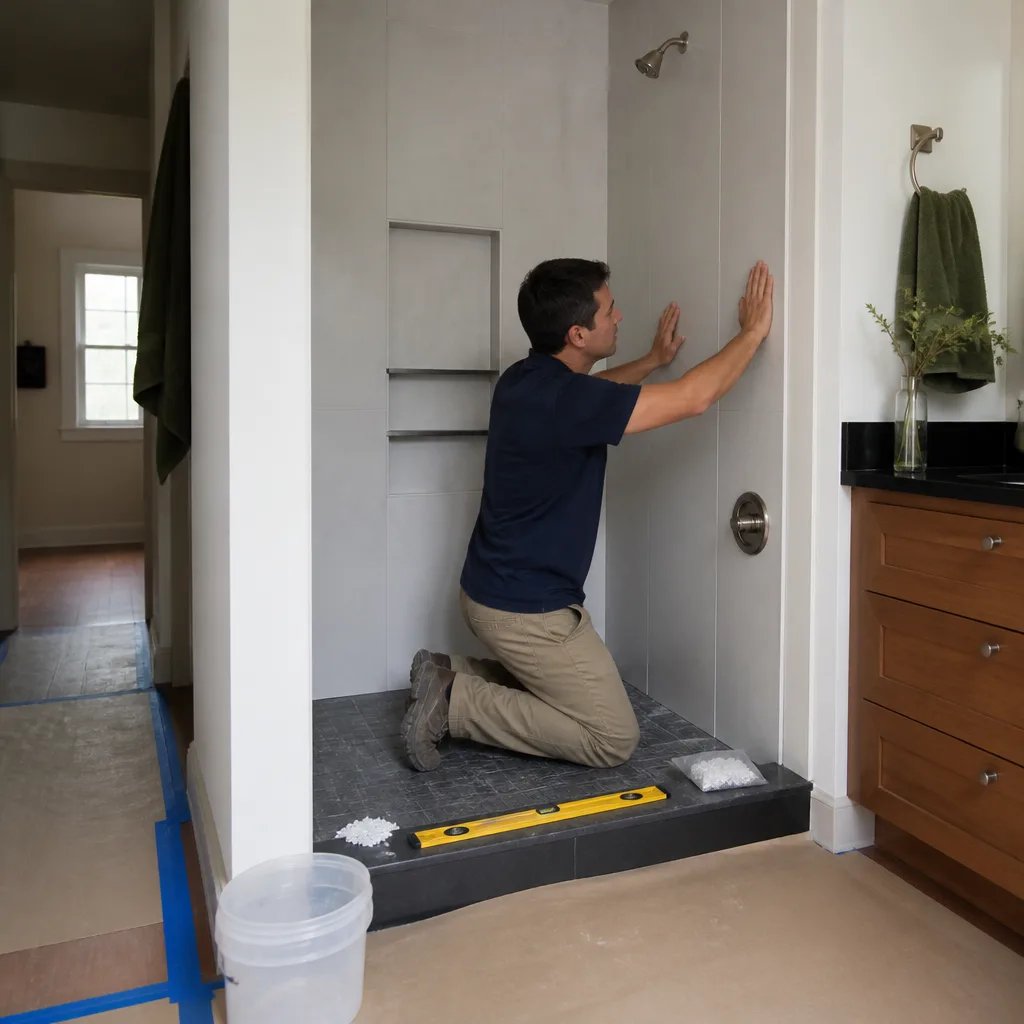
Tile deserves its own section because it’s the single most common DIY task that turns into a redo. Laying tile looks straightforward. What sits under the tile is what actually determines whether the floor or wall survives ten years of Westminster humidity and daily shower spray.
The components that matter:
- Substrate: the layer beneath the tile. On floors, that’s usually cement board or a self-leveling underlayment. Over wood subfloor, a decoupling membrane is often required.
- Waterproofing: in a shower, this is a bonded waterproofing membrane or a liquid-applied system behind the tile. It’s the layer that keeps water out of the wall cavity.
- Thinset: the mortar that bonds tile to substrate. Different thinsets for different applications.
- Slope: the shower pan has to drain, usually at a minimum slope of 1/4 inch per foot toward the drain.
If any of that is wrong, the failure shows up months or years later. Grout cracks. Tile pops. Water wicks into the wall. When we open up a failed DIY shower in Westminster, the pattern is usually the same: no waterproofing membrane, thinset over greenboard, or a shower pan built flat. Code inspection catches some of this. It doesn’t catch everything, especially if the inspection happens before the tile goes down and the finish work is done after.
Vanity replacement is simpler. If you’re swapping a vanity in the same location with the same plumbing rough-in, the work is mostly cabinet install, countertop, and connecting existing supply lines and drain. Permits vary by jurisdiction; call your local building department to confirm before you start. If the plumbing moves, you’ve crossed into Tier 3.
Licensed-Only Work: Why Skill Doesn’t Matter Here
The Tier 3 category is where most DIY-vs-hire arguments go wrong. Homeowners sometimes reason: “I’ve watched enough videos, I can handle the plumbing.” Maybe. But the question is not whether you can, it’s whether you’re allowed to without a permit and whether the consequences of doing it unpermitted are worth the savings.
Plumbing and electrical inside a wall are the two areas where the risk compounds:
- They’re inspected before they’re covered. A building inspector has to sign off on rough-in plumbing and electrical before the wall closes. Skip that, and the work is what’s called unpermitted and unverified.
- They involve genuine hazard. Water supply lines under pressure and 120-volt electrical circuits near water aren’t the place for unsupervised trial and error. An electrical fault in a bathroom can mean shock; a plumbing mistake behind a wall can mean slow water damage that’s invisible until the mold has taken hold.
- They’re hard to inspect once covered. Once tile and drywall go back up, no one can tell whether the work is compliant without opening the wall.
If a wall is open, permits are required, and licensed trades handle the rough-in while an inspector verifies. This is one place we don’t recommend shortcuts. We’ve seen the aftermath in Westminster homes more than once, and the correction is always more expensive than the original licensed job would have been. For a fuller picture of how a permitted remodel runs from start to finish, see our Bathroom Remodeling in Westminster page.
The Insurance and Resale Trap Nobody Mentions
Here’s where the practical consequences start to add up. When you sell a house in California, you complete a Transfer Disclosure Statement (TDS) and, in most cases, a Seller Property Questionnaire. Both ask about permits and about any alterations or additions. A bathroom remodel done without a permit has to be disclosed. It doesn’t have to be corrected, but it has to be disclosed.
What actually happens next depends on your buyer and their lender:
- Buyers often negotiate down. Unpermitted work on a bathroom can knock thousands off a sale price.
- Lenders and appraisers, particularly for FHA and VA loans, can flag unpermitted work and require correction before the loan closes.
- Title insurers and buyers’ attorneys flag the disclosure during escrow, which can extend the closing timeline.
The insurance side is just as real. If unpermitted work leads to water damage, and your homeowner’s policy investigation shows the work was never permitted, the claim can be denied or reduced. The insurer’s question isn’t “did the work look good?” It’s “was the work permitted and inspected?”
In a Southern California real estate market where resale is the primary exit for most homeowners, unpermitted bathroom work is a live line item on a future closing statement. That risk is in the thousands even before a single tile is installed.
The Hidden Cost of Fixing a DIY Mistake
DIY savings have to be netted against what correction costs. In our experience, the correction almost always exceeds the original licensed job.
Here’s how a failed DIY tile shower in Westminster typically plays out:
- Original DIY cost: $2,000 to $4,000 in materials and tools.
- Failure shows up 12 to 24 months later as cracked grout, loose tile, or a musty smell.
- Demo: licensed contractor opens the wall, verifies what’s wrong, removes tile and substrate. Cost: multiple thousands on its own, because demo is labor-heavy and the tile is bonded.
- Rough-in correction: if the drain was never sloped right or the waterproofing was absent, the pan and valve get rebuilt. This requires a permit, an inspection, and licensed labor.
- Finish redo: new tile, new thinset, new grout, new waterproofing.
By the time you total it, the “cheap” DIY shower often costs more than a licensed remodel of the same bathroom would have from the start. And that’s before accounting for the property inspection report you’ll be handing to a buyer down the road.
This is why we don’t quote by the hour. Our General Contractor in Westminster pricing puts the full scope in writing before work starts, which makes the comparison between DIY and licensed work honest. A written price is also the only way to know whether the DIY route is genuinely cheaper once tools, materials, permit fees, and your own time are counted.
Where DIY Actually Saves Money
There is a real and safe DIY zone, and it sits almost entirely in cosmetic finish work. Here’s where DIY saves money with zero risk and no permit:
Paint and finish
Walls, ceiling, trim, and door trim. Two coats of a quality bath-rated paint. If a licensed contractor paints as part of the project, ask them to leave primer-only and finish it yourself. You save the paint labor without touching the systems.
Hardware and fixtures
Cabinet pulls, towel bars, robe hooks, toilet paper holders, and the showerhead itself (the fixture, not the valve behind the wall). A quality Moen or Kohler showerhead isn’t hard to thread onto an existing arm.
Mirrors, shelving, and accessories
Proper anchors into studs or with high-quality drywall anchors are enough for a mirror, medicine cabinet (the surface-mount kind, not a recessed one), and shelving. This is genuinely DIY.
Caulking and grout touch-ups
Re-caulking the seam between the tub and tile, or touching up grout lines, is a Saturday-afternoon task. It’s the kind of maintenance that keeps a shower in Westminster (with our year-round humidity swings) from letting water into places it shouldn’t.
Paint-grade cabinetry and trim
If a licensed contractor installs KraftMaid or Wellborn cabinetry in Westminster, you can paint or finish any exposed trim and molding after install. That’s finish work, and it’s the safest place to put your labor.
For the parts of a remodel where the trades should stay in the trades, see our Kitchen Remodeling in Westminster page for how the same category split works in a kitchen.
Westminster-Specific Notes on Permits and Housing Stock
Westminster has some specific realities that affect a bathroom remodel:
- Housing age. Much of Westminster’s housing stock dates to the 1950s through 1970s. That means galvanized or older copper supply lines, cast iron drains, and electrical panels that may not be sized for today’s bathroom loads. If the rough-in is old, a bathroom remodel is often when you discover it.
- Permit office. The City of Westminster Building Division handles residential permits locally. Turnaround times vary by workload, and inspection scheduling is on the city’s calendar, not the contractor’s. Plan for it.
- Climate. Westminster sits a few miles inland from the coast, with marine layer humidity that pushes into bathroom walls. A shower with bad waterproofing fails faster here than in, say, Palm Springs. That only makes the substrate conversation more urgent.
- Older additions. We’ve seen unpermitted additions and closed-off garages in Westminster that complicate a bathroom permit later. If part of a home is unpermitted, the building department may want to see that first.
If your Westminster bathroom is part of a larger project, our Bradford Remodeling Co Westminster home page walks through how we structure the full scope and the written guarantee on every job.
Common Mistakes to Avoid
- Paying a friend or handyman for work over $500 combined. Under California contractor law, that’s an unlicensed contractor job. It doesn’t matter that they did it well or that they’re a friend. The legal status is the same.
- Doing tile without waterproofing. Tile over greenboard, thinset without a membrane, or a shower pan built flat. These fail on a two-to-five-year horizon in Westminster humidity, and the correction costs more than the original job.
- Skipping the permitting step to “save time.” Permits are slow because inspections are real. Skipping them saves weeks now and costs thousands at resale.
- Assuming the contractor pulled the permit. Always ask. Licensed contractors pull their own permits. If a contractor asks you to pull the permit under your name, that’s usually a red flag.
- Not verifying a contractor’s license and workers’ comp coverage. Ask for the license number and check it against the CSLB database. If uninsured workers are injured on your property, the insurance exposure can fall back on you as the homeowner.
- Starting demolition before the permit is in hand. Opening a wall before permits are pulled means any inspection catches an open wall, and the work may need to be documented retroactively.
- Buying the fixtures before the design is set. A freestanding tub, a wall-mount faucet, or a particular toilet rough-in can dictate plumbing work that isn’t in the original scope. Fixture selections should follow the plumbing plan, not the other way around.
See the difference
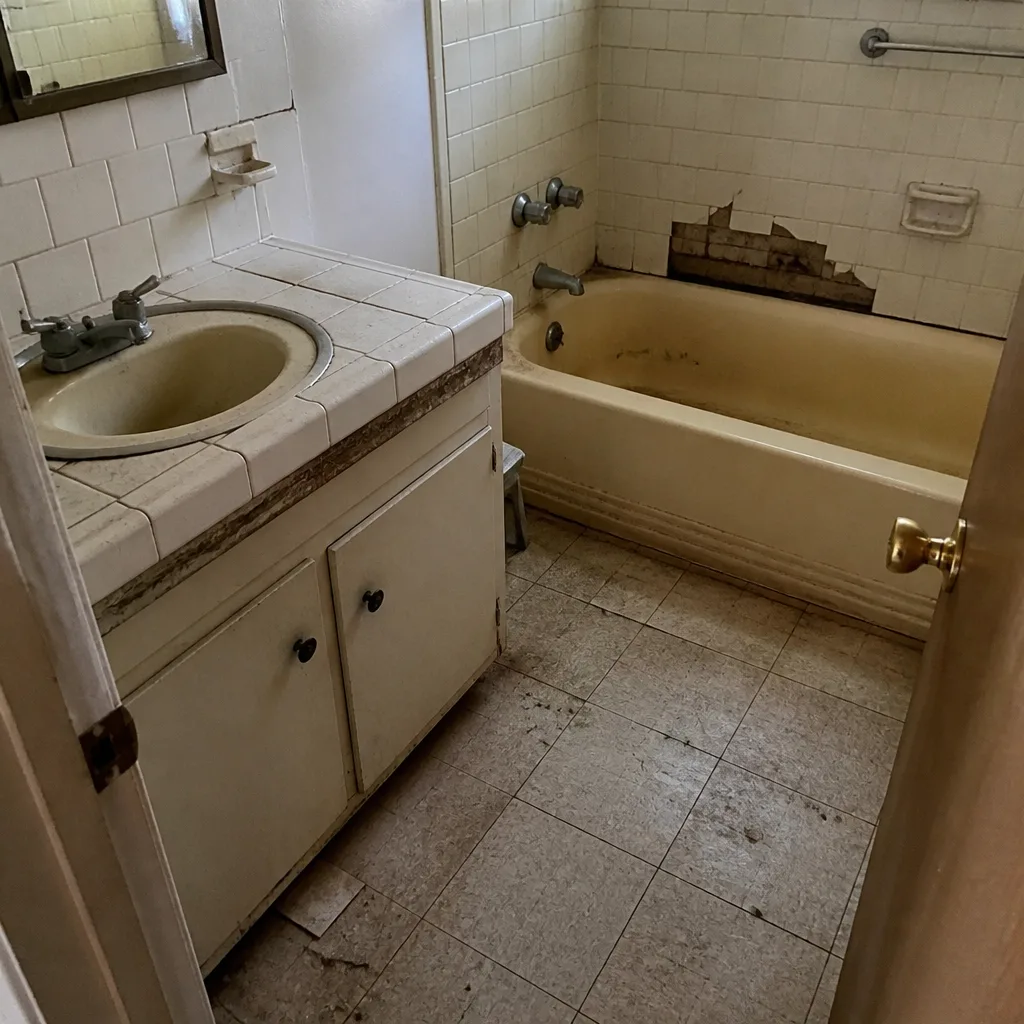 Before
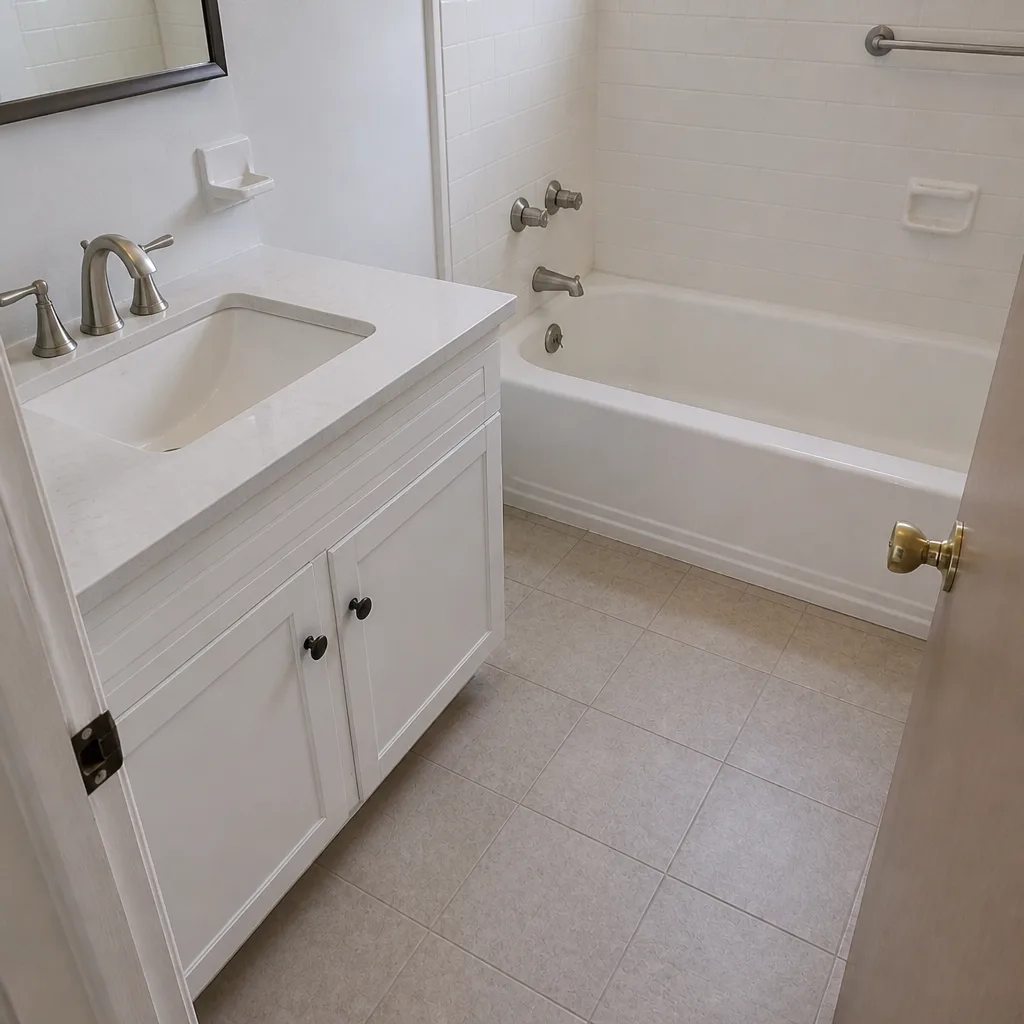 After
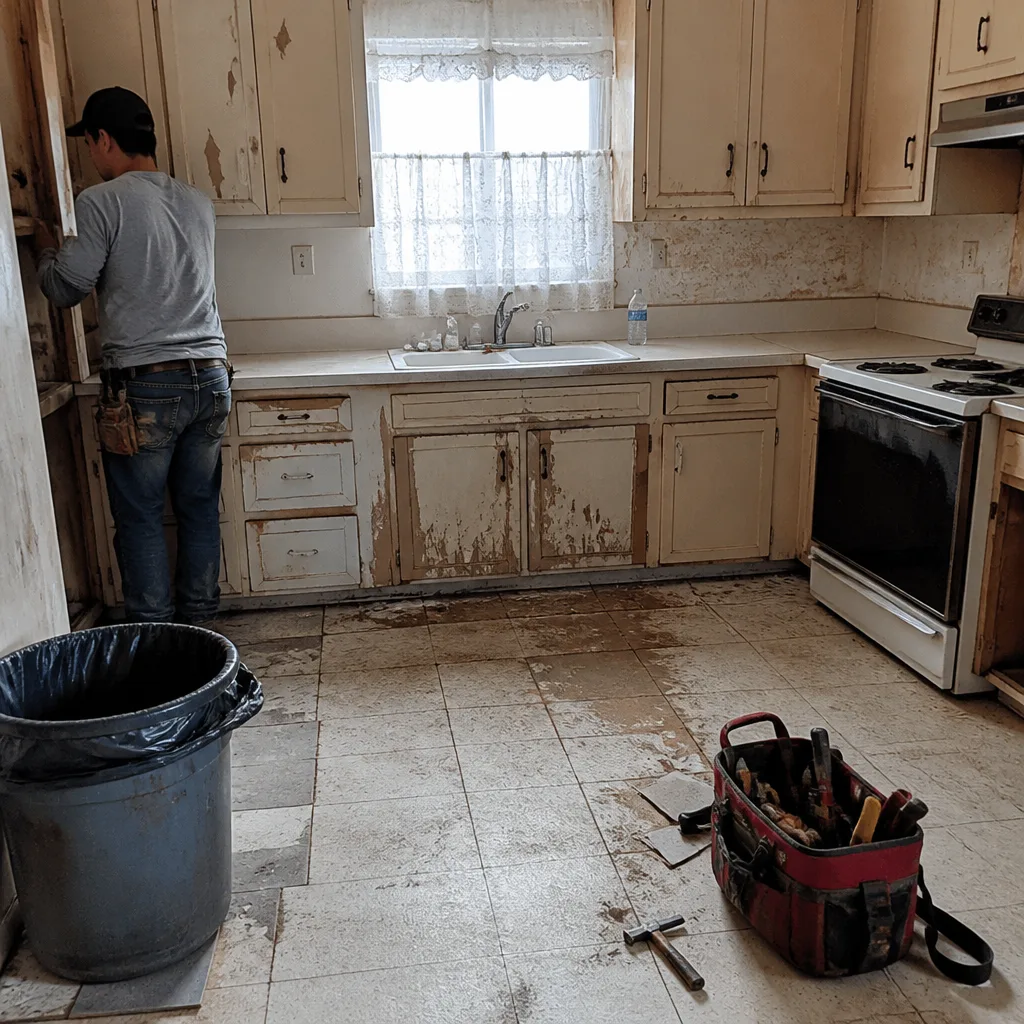 Before
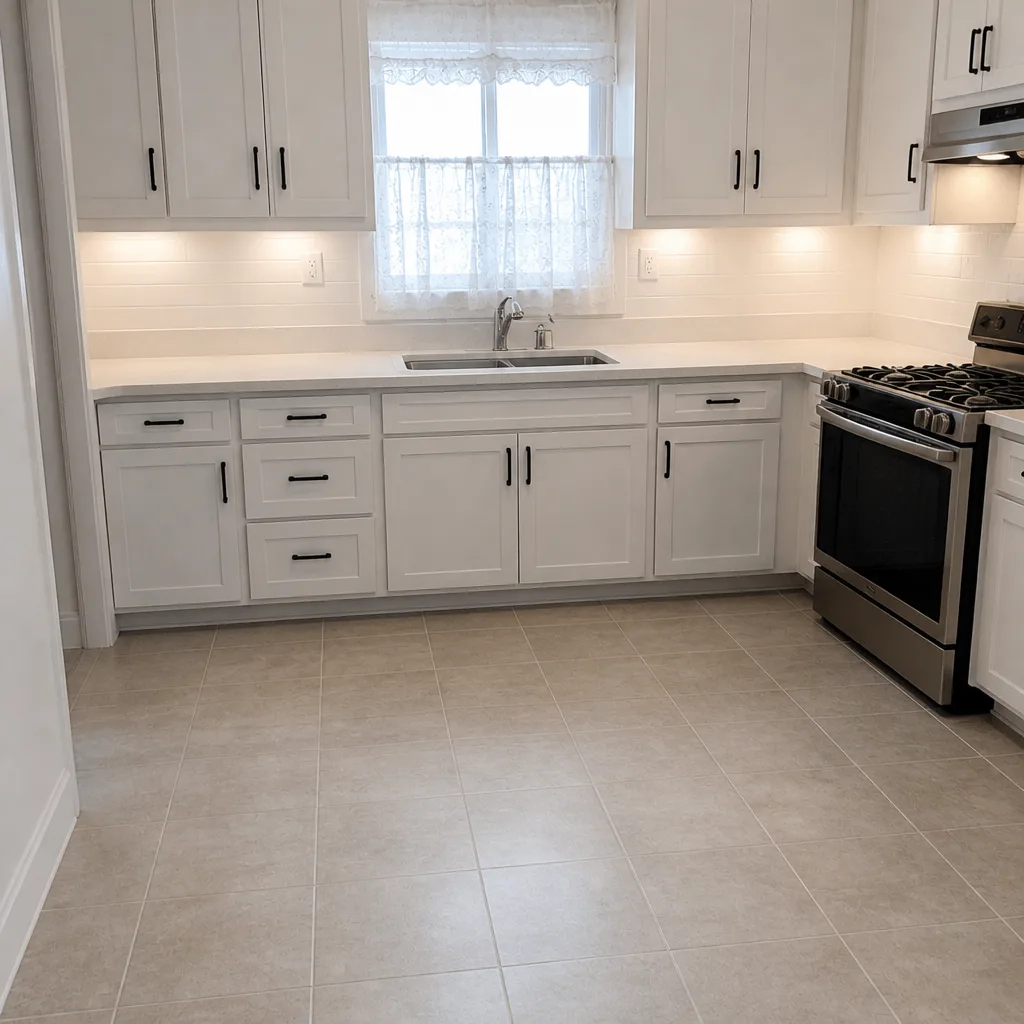 After
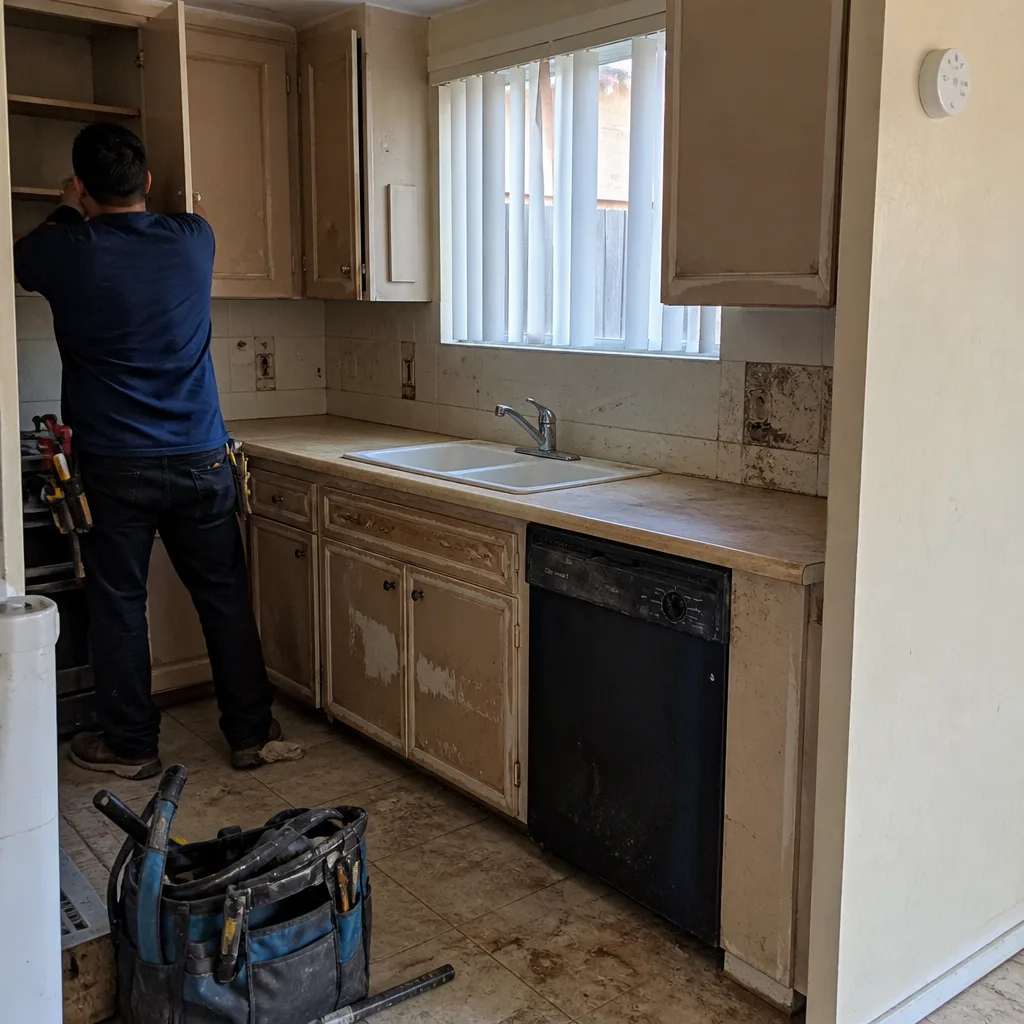 Before
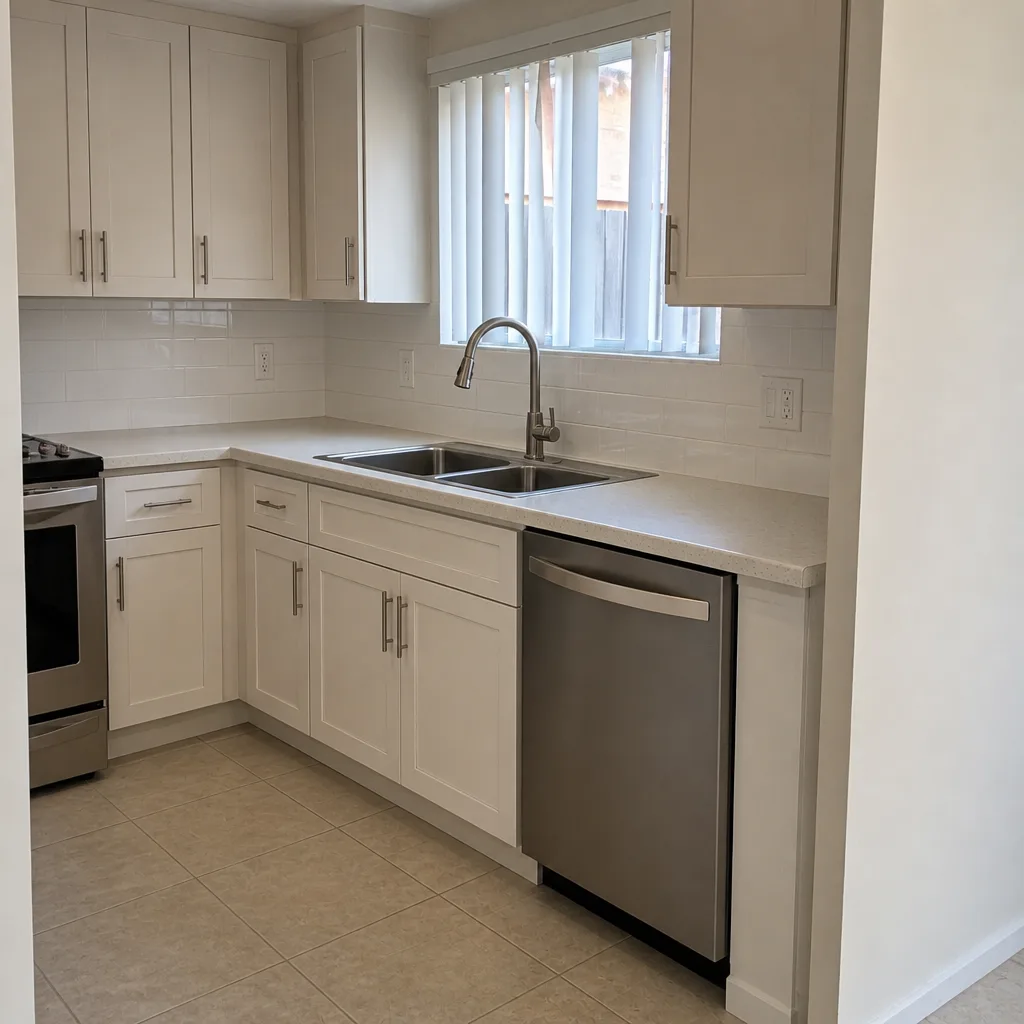 After
When to Call a Professional
Call a licensed contractor the moment the work crosses the wall line. That includes any plumbing rough-in, any electrical rough-in, any relocated drain or supply line, any structural change, and any tile or waterproofing work you’re not sure you can pass inspection on. Also call when your Westminster home is older and the rough-in condition is unknown, because opening a wall reveals problems a homeowner can’t fix unpermitted. Bradford Remodeling Co Westminster offers free estimates in Westminster and puts the full price in writing before any work starts, backed by the 365-Day Done Right Promise. Call (833) 954-5086.
One more reason to call: the guarantee transfer. When a licensed contractor completes a bathroom remodel with permits and inspections, the documented scope and warranty become part of the home’s record. That has real value at resale, and it’s a line item the DIY route can’t produce.
Frequently Asked Questions
Yes, if you pull an owner-builder permit and do the labor yourself. The work has to be on the home you live in, for your own use. The moment you pay someone else to do the work and the combined labor plus materials exceed $500, the job requires a licensed contractor.
DIY is cheaper for cosmetic work like painting, hardware, caulking, and mirrors. For tile, plumbing, and electrical, the licensed route is usually cheaper in total because DIY correction or resale disclosure can cost more than the original job. The savings are real, but they live in finish work, not in the walls.
You’ll have to disclose it on the Transfer Disclosure Statement and the Seller Property Questionnaire. In most Westminster closings, that disclosure becomes a negotiation point. Buyers may renegotiate, and some loan types can require correction before closing.
It depends on the scope. A direct toilet swap usually doesn’t require a permit, but check with the City of Westminster Building Division first. A vanity replacement in the same location with no plumbing changes is often permit-exempt; moving the plumbing is not.
Not legally if the combined labor and materials exceed $500. Tile work is real contractor work in the state’s eyes, and a handyman without a contractor license cannot legally take the job. This applies whether the job passes inspection or not.
Every Bradford Remodeling Co Westminster project carries a full-year written guarantee. If the work fails inside that window, we come back and correct it at no charge. The full scope of the guarantee is in writing before work starts, along with the written price.
The Bottom Line
The DIY-vs-hire decision isn’t a skill question. It’s a legal and physical one. In California, the $500 combined-labor threshold makes most paid help illegal unless the person is licensed, and the owner-builder permit only protects you when you’re doing the labor yourself. Within that framework, the safe DIY zone is cosmetic finish work: painting, hardware, caulking, and accessory installs. Tile, plumbing rough-in, electrical, and any work that gets covered by a wall should be permitted, inspected, and done by licensed trades. Unpermitted work follows the house to resale. If you’re in Westminster and want a straight written price before you decide, call us and we’ll put the scope in writing.
Call (833) 954-5086 to schedule your free estimate in Westminster. Every price we quote is in writing before work starts, every job carries the 365-Day Done Right Promise, and a live person answers the phone 24 hours a day, 7 days a week.
Written by the team at Bradford Remodeling Co Westminster.